

KUALA LUMPUR, May 26 — Malaysia’s push to strengthen artificial intelligence (AI) capabilities across industries is highlighting a growing need for specialised digital talent, amid a demand for structured education and international Artificial Intelligence (AI) training.
As this demand accelerates globally, universities are expanding specialised AI programmes to keep pace with evolving workforce requirements. Among them, the University of Bristol, named the United Kingdom’s “AI University of the Year” at the National AI Awards 2024, is broadening its postgraduate offerings across engineering, business and healthcare disciplines.
The development comes as Malaysia enters the first phase of its National AI Technology Action Plan 2026–2030, with efforts to build a pipeline of skilled professionals gaining attention across both public and private sectors.
A 2024 TalentCorp study estimates that AI and digitalisation could impact around 620,000 jobs, or 18 per cent of the workforce, within five years, spanning industries such as manufacturing, services, healthcare and finance. Digital Minister Gobind Singh Deo has highlighted 2030 as a key milestone under the AI Nation 2030 agenda, with efforts to build Malaysia’s AI talent pipeline.

An international postgraduate student focuses on studies to advance their career. — Picture courtesy of University of Bristol
The university has introduced four specialised AI master’s programmes, as countries including Malaysia prioritise advanced digital skills to support future growth. All four will be based at Bristol’s Temple Quarter Enterprise Campus, scheduled to open this year as part of a new innovation district focused on collaborative learning and research.
Malaysian students enrolled in AI programmes across engineering, business and healthcare disciplines reflect the kind of structured AI pathways needed as the country accelerates its digital economy and smart city agenda, according to the University.
The MSc in Artificial Intelligence focuses on AI theory, programming and ethical considerations, grounding students in technical capability alongside responsible deployment, while engineering applications are covered through the MSc in Engineering with Artificial Intelligence, which combines AI with disciplines such as manufacturing, robotics, energy and infrastructure, supported by industry-linked projects and applied learning.
In parallel, the MSc in Artificial Intelligence for Business, delivered jointly with the university’s business school and Faculty of Science and Engineering, centres on data-driven decision-making, innovation strategy and organisational transformation, with emphasis on ethical and sustainable AI use in commercial settings.
The MSc in Artificial Intelligence for Medicine and Health brings together students from medicine, life sciences and engineering, applying AI to diagnosis, treatment planning and biomedical research, alongside ethical, legal and regulatory frameworks governing healthcare AI.
The University also maintains partnerships with global firms including IBM, GSK, EDF, BT, Airbus and Rolls-Royce, providing students, including those from Malaysia, with industry exposure and applied learning opportunities.
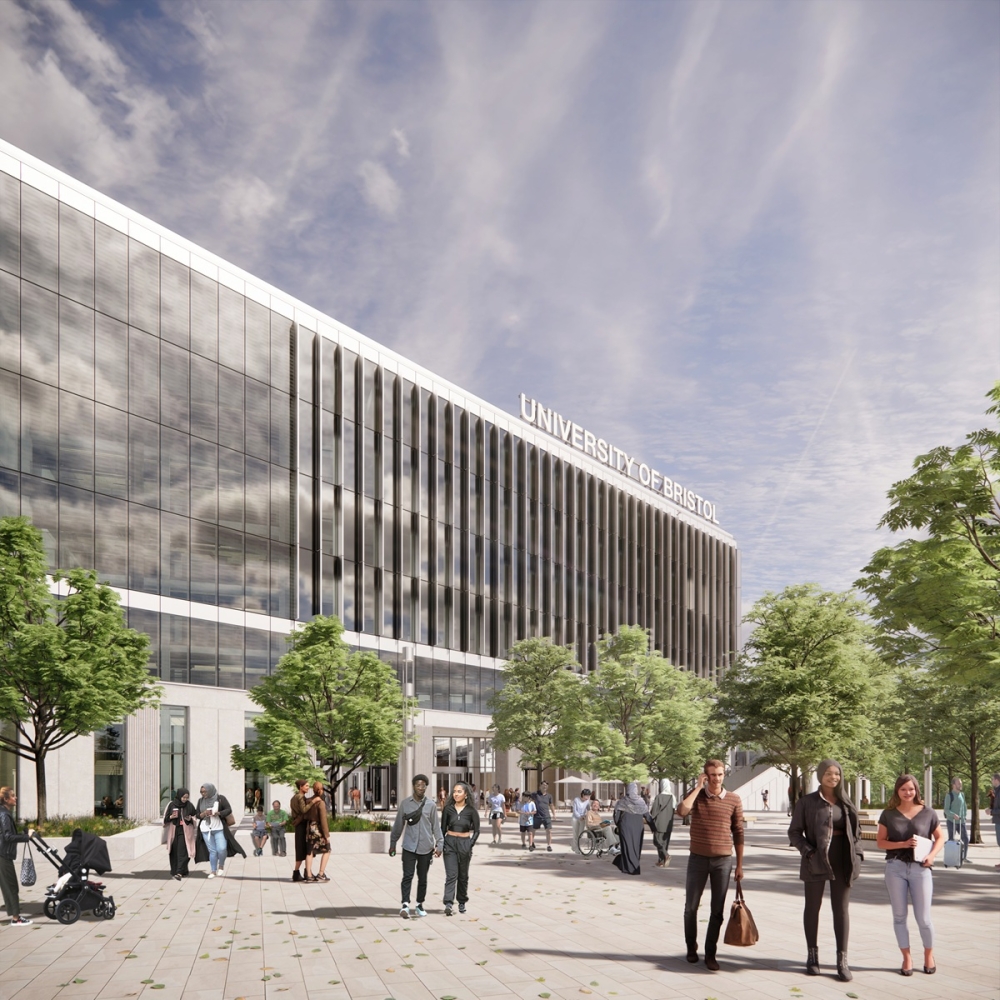
University Square: Artist’s impression of University of Bristol’s Temple Quarter Enterprise Campus, due to open in 2026. — Picture courtesy of University of Bristol
For Malaysia, where digital transformation is progressing across industries, such developments highlight the importance of expanding access to structured AI education pathways to support future workforce needs.
With world-class academic expertise, industry collaboration, and cutting-edge research infrastructure, including Isambard AI, the UK’s fastest and most powerful supercomputer, the University of Bristol positions itself as a strategic partner for Malaysians seeking to lead in the AI-powered global economy. Visit www.bristol.ac.uk/malaysia-ai