
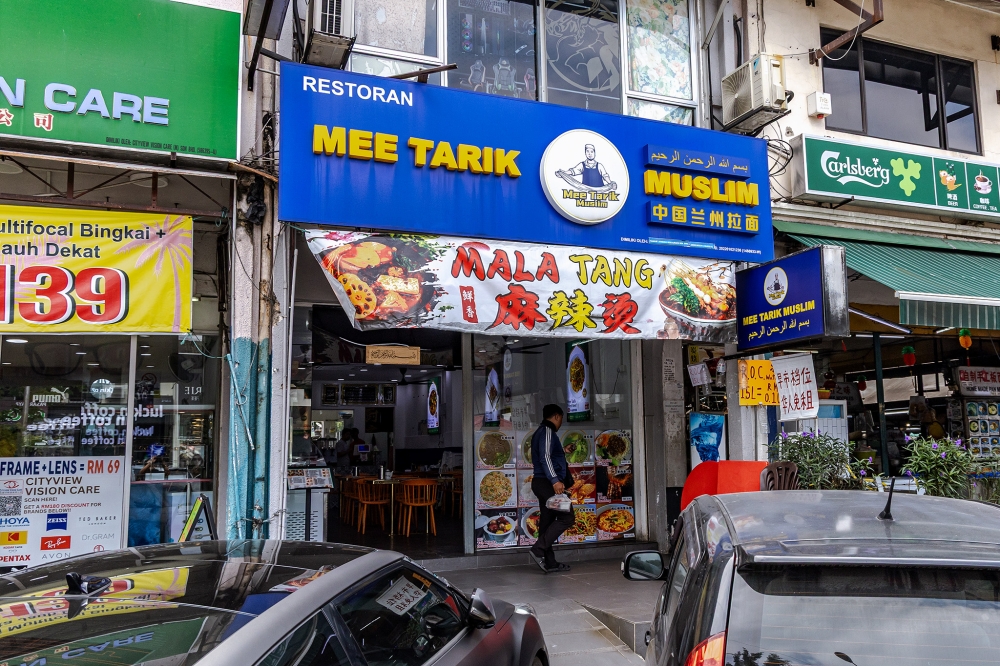
KUALA LUMPUR, Feb 2 — When Chinese Muslim entrepreneurs look beyond China’s borders, Malaysia often tops the list — not for its market size, but for something far more practical: a shared language, a multicultural society and a business environment they already understand.
Since the Covid-19 pandemic, many of these entrepreneurs have come to see Malaysia not as an end point but as a launchpad — a base to build systems, talent and products before expanding deeper into the region.
For many, Malaysia’s population of over 34 million — including some 20 million Muslims and more than six million ethnic Chinese — makes it a natural starting point.
“Chinese Muslims typically speak Mandarin but are generally less proficient in English. This makes Malaysia a comparatively easy place for them to do business.
“Although they are Chinese Muslims operating halal restaurants, Malaysia’s multicultural environment allows them to handle company registration, secretarial matters and staff recruitment in Mandarin.
“Therefore, language accessibility is a crucial factor,” Malaysia Chinese Restaurant Association president Gao Haoyun told Malay Mail in a recent interview.
Malaysia as post-pandemic launchpad
Gao said Malaysia’s business-friendly policies and strong bilateral ties with China had also encouraged Chinese Muslim businesses to expand overseas in the post-pandemic period.
China’s food and beverage sector was hit especially hard by prolonged lockdowns, which disrupted dine-in operations and supply chains.
Competition intensified during the uneven recovery, leaving many halal-focused operators — mainly from northern and western China — searching for overseas markets to diversify risk and reignite growth.
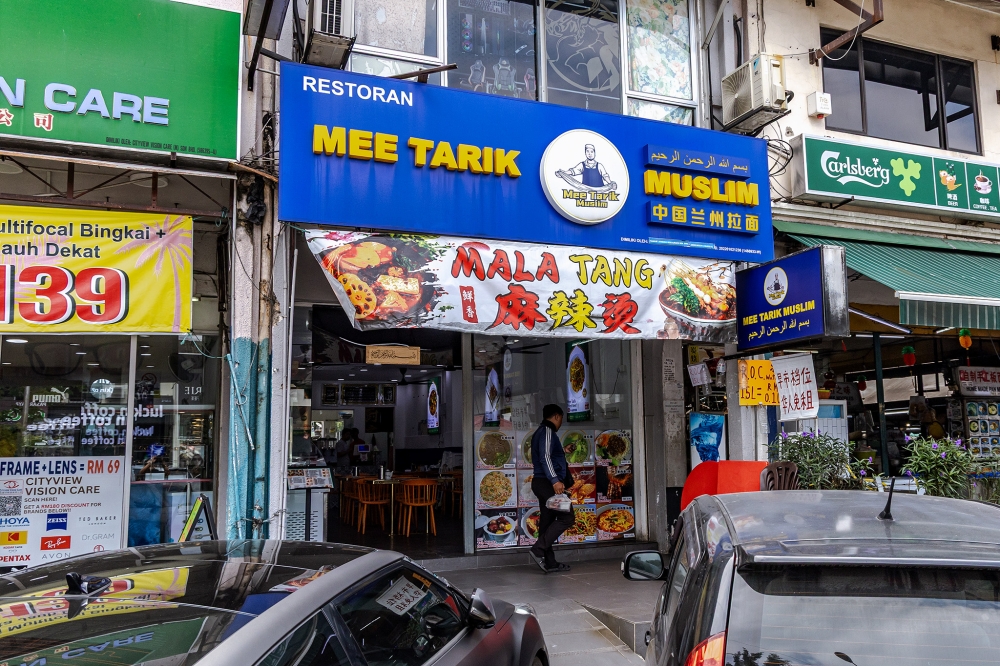
Gao said Malaysia’s business-friendly policies and strong bilateral ties with China had also encouraged Chinese Muslim businesses to expand overseas in the post-pandemic period. — Picture by Firdaus Latif
Where Chinese Muslim brands cluster in Malaysia
In Malaysia, Gao noted, Chinese cuisine — including Chinese Muslim offerings — is concentrated in three key urban hubs: George Town, Johor Bahru and the Klang Valley.
“These three cities are strategic centres for the development of Chinese brands, not necessarily halal-focused,” he said.
The Klang Valley, he added, is experiencing the fastest growth and is the most competitive market, driven by its large population and the rapid rise in outlets.
“Nationwide, there are roughly 20,000 to 25,000 Chinese food and beverage outlets, with the Klang Valley alone accounting for around 60 per cent of them — about 11,000 to 12,000 outlets,” he said.
Not Indonesia, despite its huge Muslim population
Although Indonesia has the world’s largest Muslim population, Gao said Malaysia has consistently been the “first choice” for Chinese Muslim entrepreneurs — both historically and today.
“As for other Muslim-majority South-east Asian countries such as Indonesia, even though Indonesia has a much larger population than Malaysia, it is not usually the first option, largely due to political considerations.
“In addition, the Chinese community in Indonesia generally has weaker Mandarin proficiency.
“By contrast, company registration, taxation and regulatory compliance in Indonesia can be challenging for mainland Chinese entrepreneurs who are unfamiliar with English and lack local communication channels — a difficulty closely tied to national policy and regulatory frameworks,” he said.
Gao also cited Malaysia’s political stability, noting that ethnic Chinese are represented at all levels of government — from ministers to lawmakers — and that the country has not experienced incidents like the anti-Chinese unrest seen in Indonesia, including the May 1998 riots.
The 1998 riots erupted during the final days of President Suharto’s regime amid political instability and economic crisis, with widespread looting, arson and targeted attacks disproportionately affecting ethnic Chinese communities in Jakarta and other major cities.
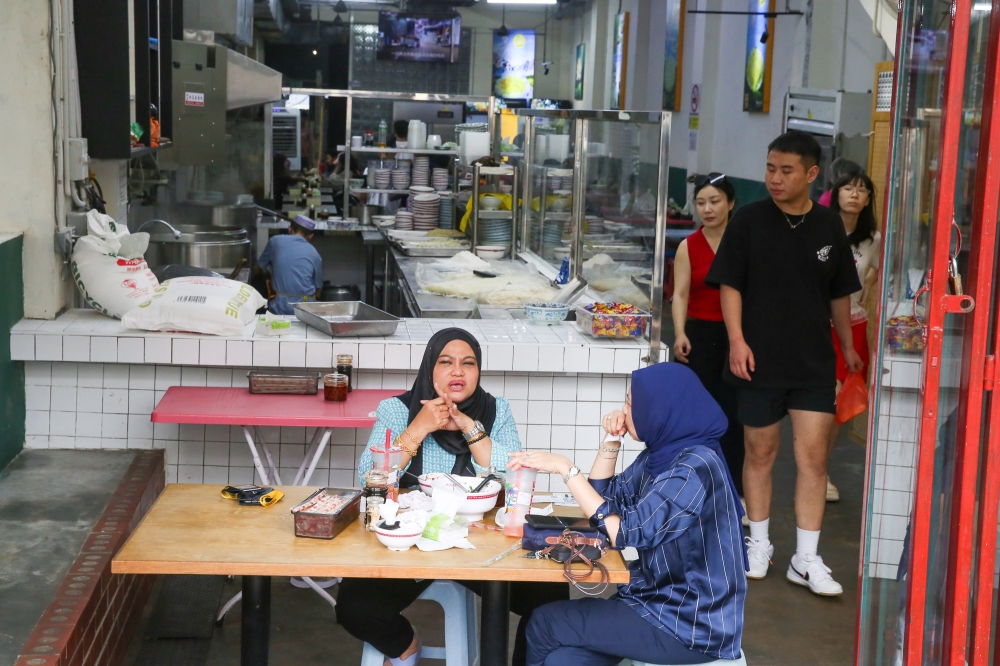
Chinese cuisine — including Chinese Muslim offerings — is concentrated in three key urban hubs: George Town, Johor Bahru and the Klang Valley. — Picture By Choo Choy May .
Malaysia first, Indonesia next
Still, Gao said these challenges do not rule out Indonesia entirely.
“Many Chinese Muslim businesses first establish their operational ‘building blocks’ in Malaysia — including products, personnel and systems — before expanding into Indonesia.
“With the help of multilingual Malaysian Chinese partners, who often speak three or four languages, entering the Indonesian market becomes far smoother,” he said.
Ultimately, Gao said the hesitation around Malaysia’s neighbour stems largely from political and language-related challenges — factors where Malaysia continues to enjoy a clear edge.