
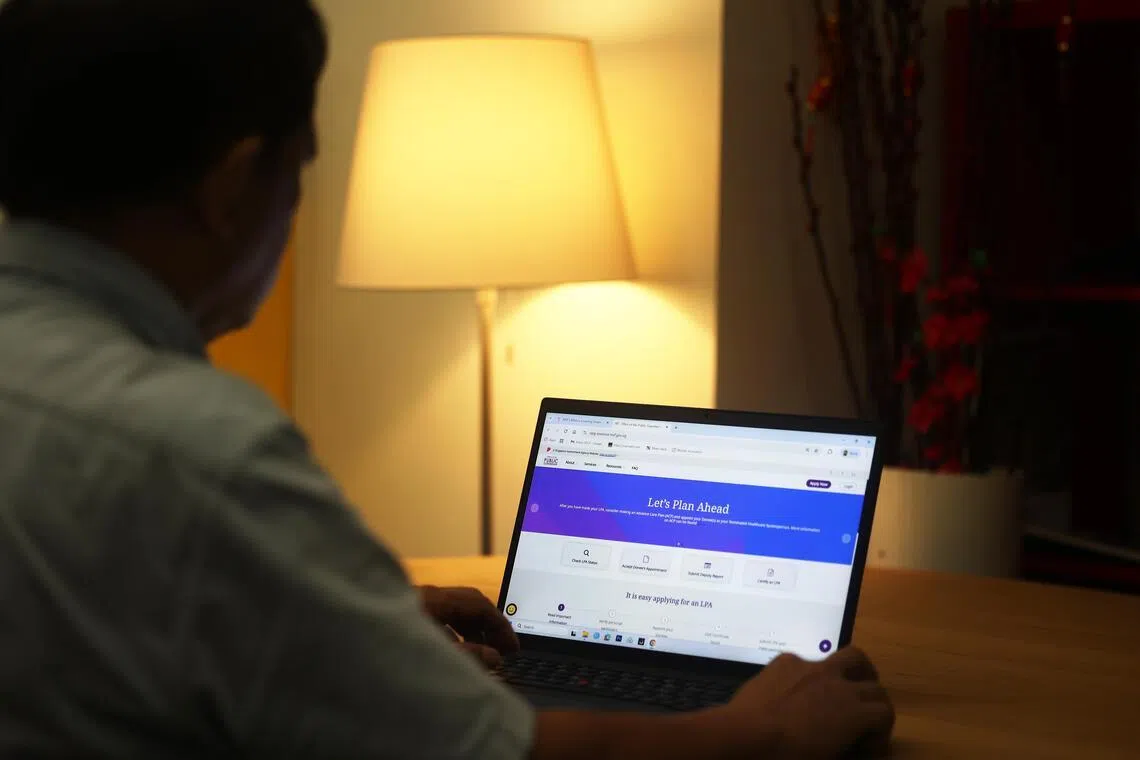
SINGAPORE – Allegations of abuse involving Lasting Powers of Attorney (LPAs) remain few in Singapore, but lawyers say that these can expose deeply personal family rifts when they do surface.
Out of the 405,000 LPAs made in Singapore in 2025, about 40 reports alleging misconduct by donees were received by the Office of the Public Guardian (OPG).
Such misconduct refers to situations where donees may not be acting in the donor’s best interests, whether in matters of personal welfare, property or financial affairs. This can range from allegations of improper care to fraud or financial mismanagement.
Though the number of cases is small, lawyers say disputes can often be prevented through open communication and clear, detailed directives set out in advance.
An LPA allows individuals to appoint a trusted person – usually a family member – to take charge of matters such as personal welfare, property and finances if they lose their mental capacity.
The Ministry of Social and Family Development (MSF), which gave the figures in response to queries from The Straits Times, said that fewer than five LPAs were suspended or revoked over the past three years.
These cases typically involved fraud or financial mismanagement, when a donee uses a donor’s assets to benefit themselves, or puts undue pressure on them to sell property or sign legal documents.
In what is reported to be one of the first few cases under the Mental Capacity Act of a co-donee being stripped of their powers, a woman successfully revoked powers from her elder sister in 2021, after the older woman had meddled with their mentally incapacitated father’s business.
The two sisters had been appointed in 2017 as donees for their elderly father. Each was granted powers to make decisions independently concerning his assets and finances, his health and medical care.
After their father suffered a stroke which left him mentally impaired, the younger sister discovered substantial sums of monies from his funeral parlour business were unaccounted for.
An employee of the business also told her that her older sister had taken their father to a law firm to execute legal documents transferring his interests in the company to her, making her its director and sole shareholder.
After taking the case to court, the older sister’s powers to manage her father’s property and affairs were revoked, but she was allowed to remain as a donee in matters relating to his personal welfare.
While the number of reports made to the OPG is low, lawyers said conflicts are not uncommon.
Ms Low Seow Ling of Emre Legal said disagreements usually come up when the LPA is activated due to a lack of communication.
She noted that some donors appoint certain children as donees without informing others, leading to shock and resentment when the arrangement is eventually revealed.
“If things are said upfront, if anybody has any unhappiness, this can be dealt with,” she said. “But most people are conflict-avoidant, so they end up doing things secretly.”
In 2021, a 60-year-old woman filed a deputyship application to manage her elderly father’s personal welfare and property. She then found out her father had already made an LPA earlier that year, appointing her brother as a donee.
Due to her bitter relationship with her brother, she filed for the LPA to be revoked, claiming that their father had been mentally unfit when he made the LPA. The application was dismissed.
The siblings’ 89-year-old mother had also intervened in the legal dispute, refuting her daughter’s claims in court.
Mr Chong Yue-En of Bethel Chambers said blindsides are the largest cause of disputes.
He said: “When people do not know what is happening and are suddenly caught by surprise, it leads to suspicion even if it is unfounded.”
Mr Chong said disputes also often hinge on whether the donor was under undue influence or lacked mental capacity at the time of signing, especially if they had medical conditions such as dementia or Parkinson’s disease.
In 2025, one woman’s LPA was revoked after a Family Justice Courts judge said her mental capacity to sign the documents did not meet the requirements under the Mental Capacity Act.
The woman had been diagnosed with dementia in 2020. Three years later, she signed an LPA to appoint her 90-year-old brother as a donee.
After her son learnt about this, he filed an application to revoke the LPA on grounds that his mother did not have the mental capacity to sign the document.
Disputes also commonly arise when donors appoint non-family members.
While the law allows individuals to choose anyone they trust – including friends – such decisions can create tension if family members feel sidelined.
“Family members then question why this person was chosen,” said Mr Chong.
One case seen by Ms Low involved a childless couple who appointed a young man they had befriended as their donee.
After the woman lost capacity, the donee allegedly began withdrawing her funds, leaving her husband unable to access her sole accounts or prove misuse.
Lawyers say disputes can also stem from how much power is given under an LPA.
Many Singaporeans opt for the standard Form 1 LPA – free and relatively simple to complete – which grants broad powers to donees.
Form 1 was made free of charge for all Singapore citizens in April, and accounts for about 98 per cent of LPAs created by citizens.
In comparison, Form 2 is used to grant customised powers to donees, and allows for specific instructions. This requires drafting by a practising lawyer, with fees depending on the certificate issuer or the lawyer.
“Form 1 is like a blank cheque,” said Mr Chong. “A lot of it is left in the hands of the donee.”
Ms Low said this can be problematic if donors do not fully consider the implications.
Both Mr Chong and Ms Low said that Form 2, though less commonly used, can help reduce potential conflict.
It forces the donor to confront bigger questions, said Mr Chong, such as how finances should be managed in specific care scenarios.
Ms Low added that lawyers often walk clients through hypothetical situations, including whether to allow cash gifts or how property should be used, to ensure intentions are clearly documented.
The OPG said that it takes complaints seriously and may investigate with the help of medical professionals and elder care practitioners.
In some cases, it facilitates conciliation between family members, though it can also apply to the court to suspend or revoke a donee’s authority or refer matters for criminal investigation.
While serious cases remain rare, clearer communication at the outset could prevent many disputes.
Ms Low said donors should speak not just to those they intend to appoint, but to those who may be affected by their decision.
The MSF said it encourages individuals aged 21 and above to make an LPA early and to discuss their preferences with loved ones to minimise misunderstandings.