
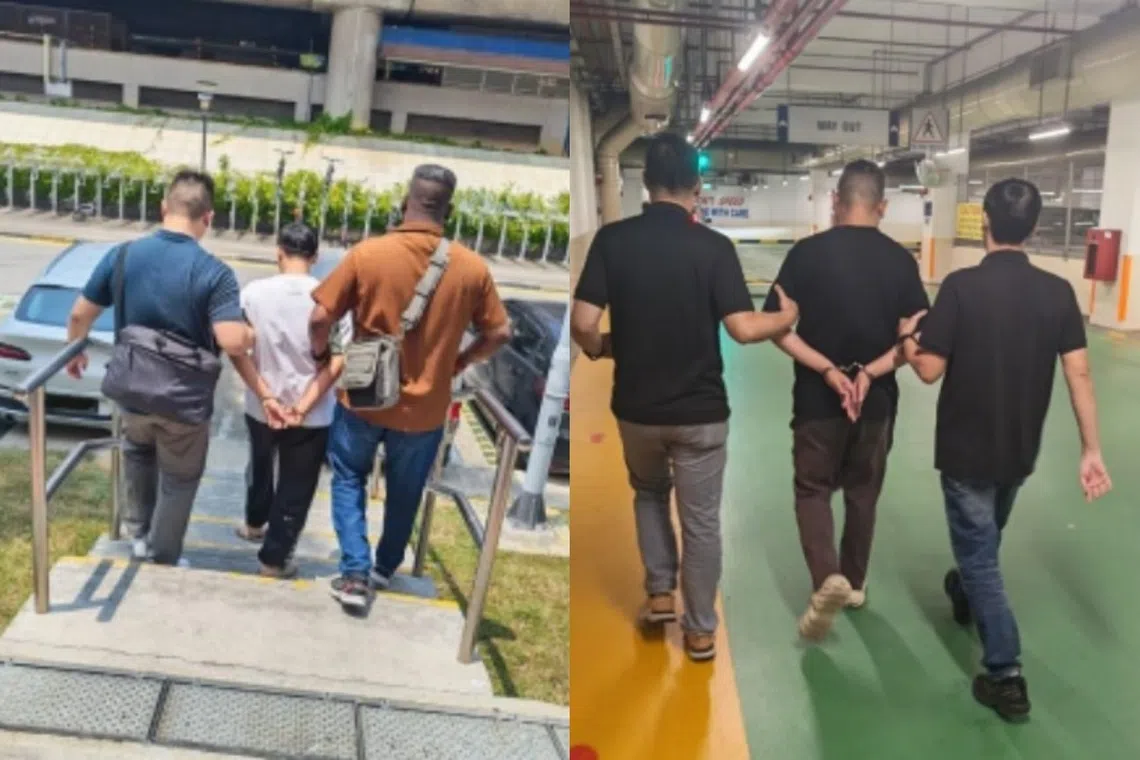
SINGAPORE – Two Malaysian mobile phone shop employees were arrested on Aug 25 for their suspected involvement in a scheme to register bogus e-wallet accounts for receiving scam earnings, said the police.
The two men, aged 25 and 47, are suspected to have exploited the identities of their customers by obtaining their Singpass login credentials to create LiquidPay e-payment accounts without their knowledge, the police said in a news statement on Aug 26.
LiquidPay is a digital wallet and payment app operated by Singapore-based fintech company Liquid Group.
In one instance, one of the suspects, in offering to help a customer who was buying a SIM card update his Singpass details, used the opportunity to create a LiquidPay account.
Further investigations found more than 170 Singaporeans and foreign workers whose Singpass accounts were linked to similar activity, said the police.
These fraudulently obtained Singpass accounts were used to register more than 160 additional LiquidPay accounts without the account holders’ knowledge.
Since early March 2026, at least 20 Singapore citizens and work permit holders have been investigated for their involvement in registering LiquidPay accounts that had been reported to receive $110,063 arising from various scams, the police said.
The two Malaysians arrested on Aug 25 are suspected of being part of a syndicate that compromises Singpass accounts, after an operation led by the police’s Cyber Command officers with support from the Singpass Trust & Safety team at the Government Technology Agency of Singapore.
The suspects will be charged in court on Aug 27 for assisting another to retain benefits from criminal conduct, an offence that carries a prison term of up to 10 years, a maximum fine of $500,000 or both.
Police investigations into Singpass users voluntarily relinquishing their account credentials are ongoing, with the offence carrying a maximum penalty of a three-year prison term and a $10,000 fine.