
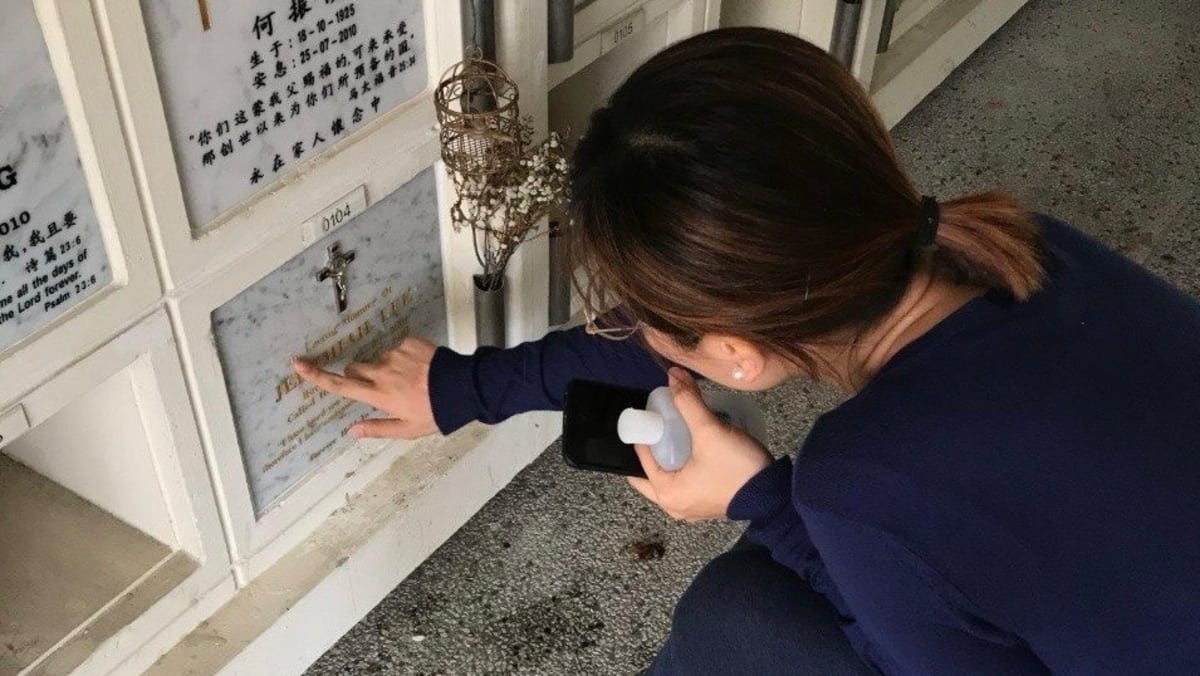
This process helped her grieve better. “It made the pregnancy loss feel real – the foetus was not just an unnamed thing in my body that was purged and thrown away along with other things. It was a life, a child that my husband and I were blessed with,” said the 32-year-old.
AFTER EARLY PREGNANCY LOSS
One reason Goh struggled to find a funeral provider was because such rites are relatively uncommon for first trimester miscarriage – especially in 2018.
In Singapore, stillbirths – pregnancy loss at or after 24 weeks’ gestation – are registered at the Immigration and Checkpoints Authority. Parents may also choose to register the baby’s name and are issued a digital stillbirth certificate for funeral arrangements.
But when it comes to miscarriages, practices surrounding the claiming of foetal remains are less standardised.
Dr Seet Meei Jiun, head and senior consultant, Department of Obstetrics and Gynaecology at KK Women’s and Children’s Hospital (KKH), said that it is standard protocol to inform patients that they may request the release of foetal remains following both first and second trimester miscarriages.
This has been a longstanding practice at the hospital, added Jocelyn Chng, assistant director of nursing at KKH.
At Singapore General Hospital (SGH), its head of Obstetrics and Gynaecology, Dr Jason Lim Shau Khng, said that patients are explicitly informed of their right to request the release of foetal remains – also a hospital practice for many years.
However, “the ability to claim remains depends on the method of management used and the identifiability of the remains,” he said.
“For first trimester cases, remains can typically be claimed after a surgical procedure. For second trimester miscarriages, patients may claim remains following a medically induced labour,” Dr Lim explained.
However, “in some early first trimester losses, the pregnancy tissue may already have been completely expelled prior to medical or surgical treatment, resulting in minimal or no identifiable remains available for claiming. In such situations, claiming may not be possible,” he said.
In other cases, “foetal tissue may not be clearly formed or identifiable from other pregnancy-related tissue. Hence, this can make the physical claiming of remains technically challenging, or in some cases, not possible.
“Whereas, in the second trimester (miscarriages), the foetus is more developed and physically formed, making it generally more feasible to facilitate a request for private burial or cremation,” Dr Lim said.