
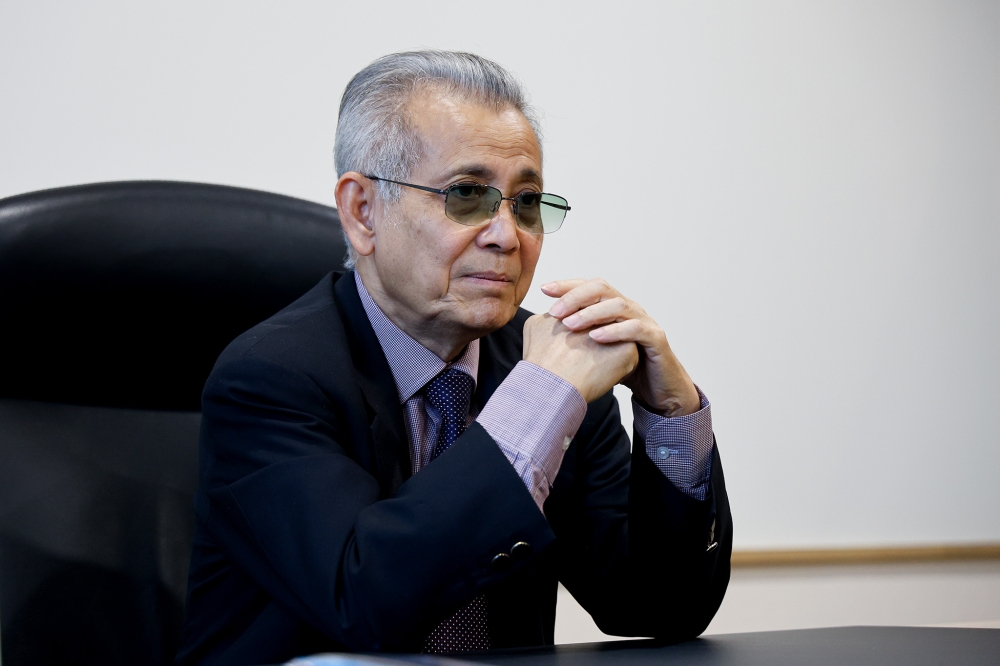
KUALA LUMPUR, Oct 7 — The Human Rights Commission of Malaysia (Suhakam) has been operating on a shoestring budget for years despite taking on more responsibilities, its chairman Datuk Seri Mohd Hishamudin Md Yunus said.
Mohd Hishamudin said the funding gap has hampered Suhakam’s plans to widen its presence outside the Klang Valley and has limited its ability to launch probes and public engagements.
“Financial constraints require Suhakam to prioritise how its limited resources are used.
“The issue has become pressing as Suhakam’s statutory responsibilities have expanded,” he told Malay Mail during an exclusive interview recently.
Section 19(1) of the Human Rights Commission of Malaysia Act 1999 mandates the federal government to provide Suhakam with adequate funds annually for its operations.
The same Act also prohibits Suhakam from receiving foreign funds but Section 19(3) permits it to receive unconditional funds from individuals or organisations — strictly only to promote human rights awareness and education.
The Act also does not provide for Suhakam to generate its own revenue — an option that may ease the national human rights body’s ongoing cash flow woes.
Challenges from financial constraints
Mohd Hishamudin said nearly 90 per cent of Suhakam’s annual budget goes towards emoluments and essential operational expenditure, leaving only 10 per cent for programmes and activities.
The lean budget limits Suhakam’s capacity to conduct investigations, monitoring, human rights education, research, advocacy and public engagement.
Amendments to the Suhakam Act in 2024 and a slew of new laws passed since then have also left greater responsibilities on Suhakam’s shoulders.
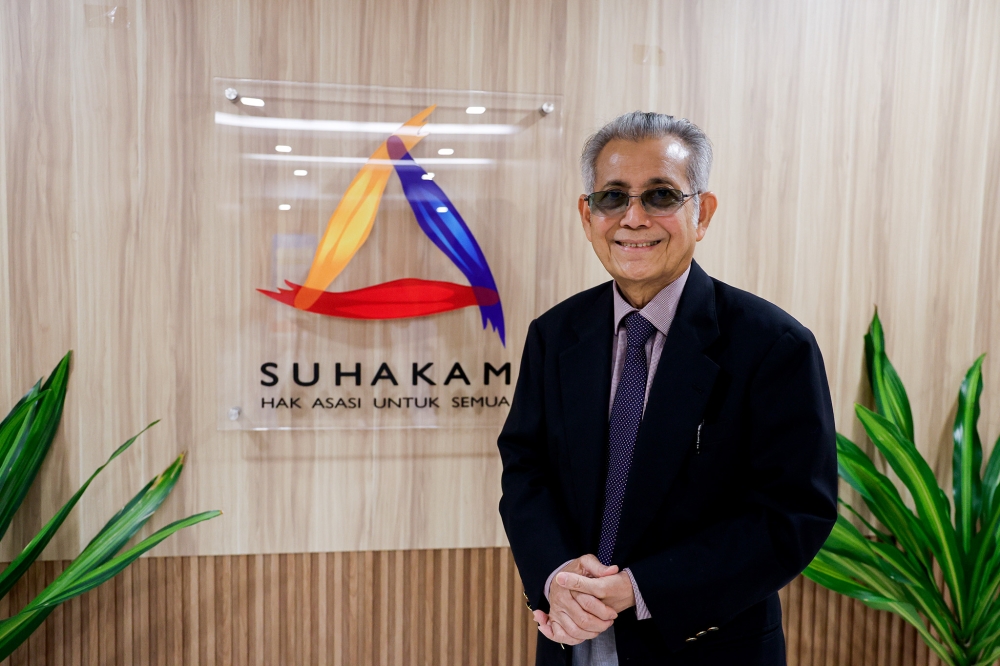
Suhakam chairman Datuk Seri Mohd Hishamudin Md Yunus at Suhakam headquarters in Kuala Lumpur recently, where he spoke about the commission’s limited funding and expanding responsibilities. — Picture by Firdaus Latif
These include the formal institutionalisation of the Office of the Children’s Commissioner as well as its monitoring and advisory roles under the Online Safety Act 2025 and the Anti-Bullying Act 2026.
Plans to make the organisation more accessible to other parts of the country have also hit a snag.
Mohd Hishamudin said Suhakam could not establish proposed offices in the northern and east coast regions of the peninsula because of budget constraints.
Some of Suhakam’s approved financial commitments were also delivered almost a year late because of budget constraints. For instance, the revised remuneration for Suhakam commissioners, which was approved in November 2025, only took effect in September 2026 after Suhakam received the necessary funds.
Own revenue cannot replace government funding
On July 1, Deputy Minister in the Prime Minister’s Department (Law and Institutional Reform) M. Kulasegaran told the Dewan Rakyat that the government is reviewing suggestions to allow Suhakam to generate its own revenue through training and related programmes.
Mohd Hishamudin welcomed the plan but stressed an important caveat: Public funding must remain the foundation of Suhakam’s funding.
“Any income Suhakam is permitted to generate should supplement, not substitute, government funding,” Mohd Hishamudin said.
Mohd Hishamudin also said that Suhakam’s reliance on government funding does not affect its independence since institutions like Parliament, the courts and even several oversight bodies are publicly funded.
However, he pointed out that stronger statutory safeguards concerning funding and the appointments and tenure of Suhakam commissioners would reinforce public confidence in that independence.
“As such, Suhakam respectfully appeals to the Government to provide it with adequate funding.
“We are not asking for more. We are only asking for what we are entitled to under the Suhakam Act and the Paris Principles: adequate funding.”