
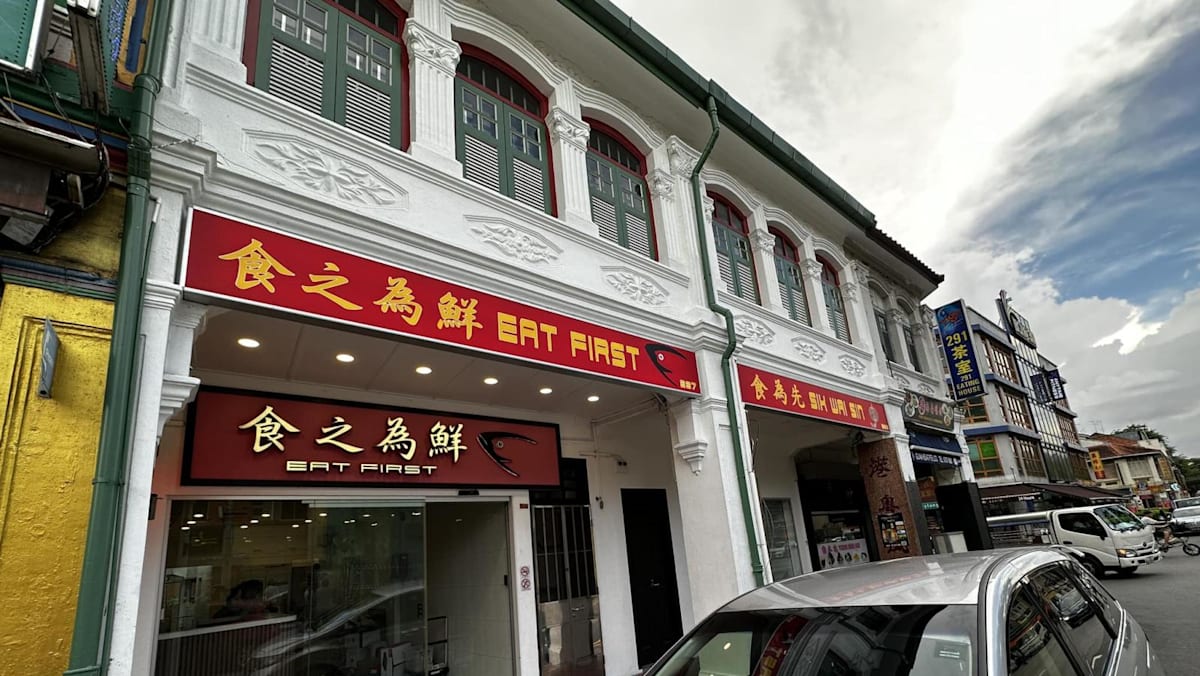
IMPACT ON THE BUSINESS
A restaurant’s Google rating does more than just determine if diners show up – it can influence how visible it is in search results.
Ms Wong Pei Wen, a senior lecturer at Nanyang Technological University’s Wee Kim Wee School of Communication and Information, said food and beverage businesses often need ratings of at least four stars to surface in searches such as “good food near me”.
While the immediate impact of review bombing can be severe, experts said effects may be short-lived.
“A wave of generosity can change public opinion as quickly as the negative ones,” said Associate Professor Kiattipoom Kiatkawsin from the Singapore Institute of Technology’s Hospitality and Tourism Management programme.
“The restaurant should address the issue professionally and clarify if there are actionable steps being taken to ensure diners feel that they are well cared for.”
Associate Professor Natalie Pang from the Department of Communications and New Media at the National University of Singapore agreed, saying that consistent positive reviews over time can mitigate short-term dips.
Mr Mimrah Mahmood, vice-president of enterprise in APAC at software company Meltwater, said if negative reviews stem from a single incident rather than overall experience, ratings often stabilise.
“The damage is sharp but short-lived. A sudden drop in ratings can affect visibility and deter potential customers in the immediate term, especially for tourists or first-time visitors who rely heavily on reviews,” he said.
Associate Professor Dianna Chang at the Singapore University of Social Sciences added that such crises can even present an opportunity for businesses to improve.
“While restaurants are entitled to set their own pricing strategies, a certain degree of flexibility can be beneficial. In this case, showing greater care and flexibility toward loyal customers and families with young children would help.”
“Businesses, both large and small, should learn to manage customer complaints and potential negative reviews more effectively, to avoid losses that far exceed something as small as S$2.”
RESTAURANT OWNERS RESPOND
Restaurant operators say review “pile-ons” have become an unfortunate reality of the industry, affecting morale even if long-term business impact is limited.
Mr Aston Soon, founder of popular Western food chain Astons, said his team takes negative reviews seriously.
“We do some soul searching and ask what we need to improve,” he said.
But he described such pile-ons as a form of “sabotage”. “If a rating plunges suddenly, there should be some form of independent investigation,” he said.
Mr Colin Chen, founder of brunch cafe Hello Arigato, said online reviews can be “a little one-sided”.
“Literally anyone can go online and give a review. There are no checks and balances. You can even create a fake email and do it,” he said. “If you have a great record, all it takes is just a few people bombarding one-star remarks.
“In the earlier years, I was a lot more affected by it. But over the years, we understand we can’t stop the public from posting what they want.”
Mr Soon suggested that Eat First consider a “daring exercise”, such as offering free meals for a day, to help repair goodwill and shift public sentiment.
While he has not faced incidents on the same scale as Eat First, Mr Chen’s business had their fair share of one-star reviews.
“The only thing we can do is ask the public to be kinder and understand that from an operator’s standpoint. There are reasons behind decisions. Maybe it just wasn’t conveyed properly and it got blown out of context.”
Mr Joel Ong, owner of Enjoy Eating House and Bar, pointed out the emotional toll such incidents can take on a business owner.
“It can be devastating for the owner to see the rating he worked hard for suddenly disappear, or for the restaurant to appear like it is a really bad one,” he said.
HOW CAN BUSINESSES RECOVER?
Experts said businesses should act quickly and communicate clearly.
“Speed and clarity are crucial levers of reputation management. When negative sentiment spikes during a viral moment, silence or a delayed response can allow the narrative to spiral,” said Meltwater’s Mr Mahmood.
Businesses should also flag inauthentic reviews and understand why the issue resonated with the public, said Assoc Prof Kiatkawsin.
Where possible, businesses should try to find a compromise, such as allowing water in reusable bottles or making exceptions for children.
“Policies that worked well in the past don’t automatically hold up over time, and mindsets need to evolve accordingly. In fact, making water complimentary for diners may have minimal financial impact but could significantly improve public perception,” he said.
“Ultimately, diners hold the leverage. They can easily choose alternatives, and there will always be other restaurants willing to welcome them.”