
SINGAPORE – Over the next three years, 60,000 professionals in accounting and finance will learn to use artificial intelligence tools to do everything from automating fraud detection to pulling insights from raw financial data for audits.
They will be among the first group of non-tech professionals to be trained under a national push to equip 100,000 workers to be confident in using AI in their own line of work by 2029.
The AIxAccountancy programme, which will be free for its target trainees, will be delivered in two phases.
Participants will first be building their foundations with popular AI tools such as ChatGPT, Claude and Copilot, said the Infocomm Media Development Authority and Institute of Singapore Chartered Accountants (ISCA) in a statement on July 3.
The national accountancy body is one of several professional bodies partnering IMDA to develop AI fluency courses under the National AI Impact Programme, first announced in March with the 100,000 AI-fluent workers target.
Subsequently, learners will be taught how to apply AI in their specific roles across accounting, finance, auditing, taxation and other related disciplines. This includes building AI tools for fraud detection and tax computation, and developing customised accounting chatbots.
Course participants will also be taught to use AI for budgeting, forecasting and business analysis.
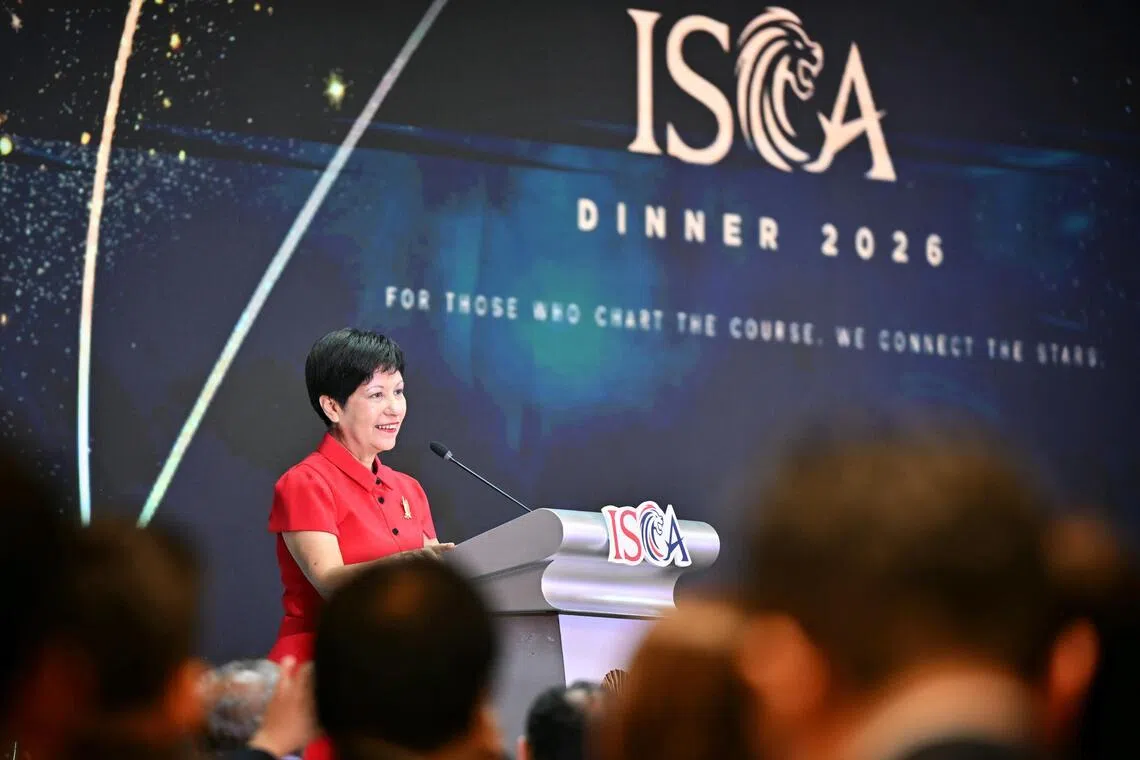
The programme is crucial to help accountants keep up with the changes in the AI space happening at break-neck pace, said Second Minister for Finance and National Development Indranee Rajah during ISCA’s annual dinner on July 3.
“The initiative will enable professionals to move beyond routine work and focus on tasks requiring judgment, analysis, and decision-making, where the true value of accountancy profession lies,” said Indranee, who is also Minister in the Prime Minister’s Office.
She added that the online course is also conveniently designed to fit the busy schedule of working professionals, taking into account their professional and personal commitments.
A list of courses under the SkillsFuture Green Workplace programme also went live on July 3 to boost the supply of professionals with sustainability skills, starting with sustainability reporting, said Indranee.
Fees of the courses, jointly curated by the Accounting and Corporate Regulatory Authority and Skills and Workforce Development Agency, will be subsidised by up to 90 per cent.
Sustainability reporting refers to the practice of disclosing an organisation’s environmental, social, and governance (ESG) performance and impacts.
“Across the region, there are growing expectations from investors, regulators, and supply chain partners to strengthen the quality and credibility of sustainability reporting practices,” said Indranee, adding that a “strong pool” of professionals are needed to meet this demand.
Upon completion of the AIxAccountancy course, learners will also receive a certificate and a digital badge that serves as a verifiable, tamper-proof record of achievement that signals AI proficiency to employers, said ISCA and IMDA. It can be shared across professional platforms such as LinkedIn.
Following the course, accounting professionals who are in, or plan to go into management roles can also enrol in modules that will teach them to lead responsible adoption of AI and firm-wide AI transformation.
“Prior to its launch, more than 20,000 individuals across the public and private sectors, including tertiary students, had already expressed interest in AIxAccountancy, reflecting strong demand to build AI capabilities,” said IMDA and ISCA in their statement.
The course is free for Singaporeans and permanent residents in the accounting and finance profession, ISCA members, and students of local Institutes of Higher Learning.
Among those who have indicated interest includes 250 staff from professional services firm PKF-CAP, who already use tools like Microsoft’s Copilot Cowork agent for administrative tasks like drafting client e-mails autonomously.
It is also used to crunch numbers from clients’ financial statements to generate reports to point out unusual trends in lieu of merger and acquisitions, said the firm’s managing director Lee Eng Kian.
“With lots of data, sometime these tasks can take time and we might lose focus,” said Lee, adding that the complexity increases as the number of statements for one audit grows.
Through the programme, the goal is to push the company’s workers to harness AI agents to carry out tasks autonomously without the need for constant prompting and instructions, said Lee.