
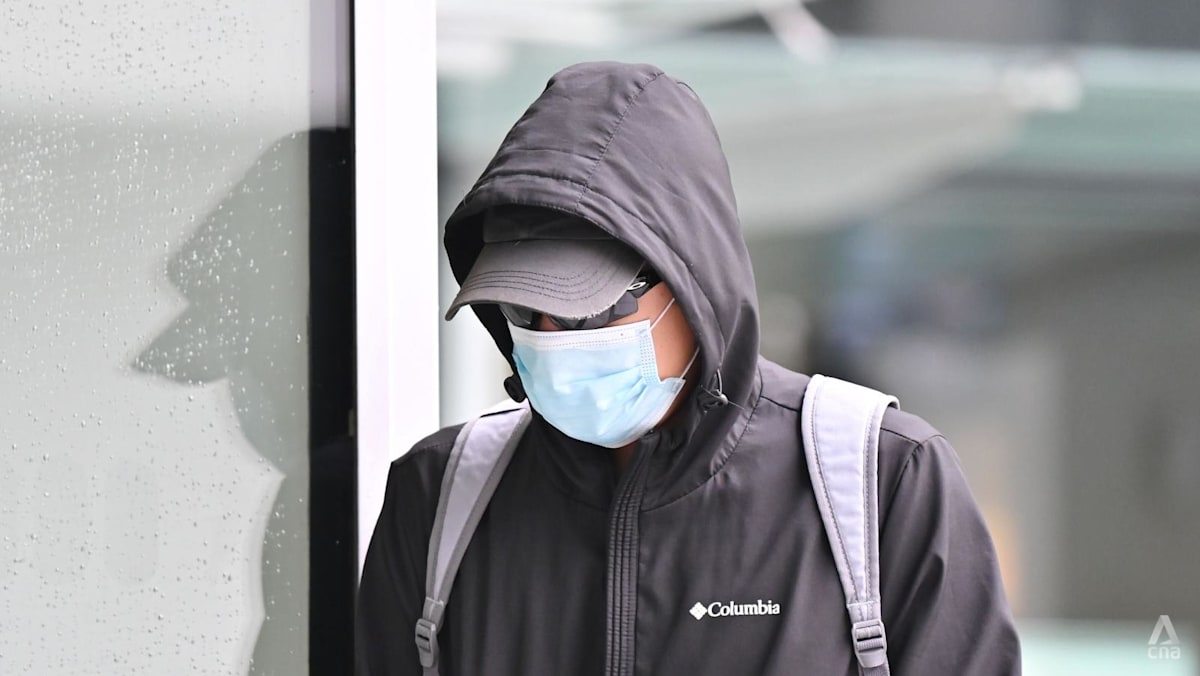
SINGAPORE: A former Singapore Armed Forces (SAF) captain was on Friday (May 8) sentenced to jail after breaking into an acquaintance’s condominium unit and stealing close to S$2.3 million (US$1.8 million) in cryptocurrency.
He then used these funds to buy luxury watches and cover his legal and illegal gambling expenses, as well as personal expenses such as housing loans.
Teo Rong Xuan, 35, was handed a jail term of six years and 10 months. He pleaded guilty to six charges – one count of securing access to a cryptocurrency cold wallet to commit theft, one count of housebreaking with intent to commit an offence and four counts of using benefits from criminal proceeds.
Another 10 charges of a similar nature were taken into consideration.
At the time of the offences, Teo was a regular serviceman with the Naval Diving Unit since 2010.
BACKGROUND TO THE CASE
Teo and the complainant, 30-year-old Xuan Songtao, first met in June 2022 through a mutual friend and co-founded a marketplace for Non-Fungible Tokens (NFTs) – unique digital assets representing ownership of real-world objects such as art or music on the blockchain.
Teo was the chief executive officer while Mr Xuan was the chief operating officer of the marketplace.
In November 2022, FTX Trading – then the world’s third-largest crypto exchange – collapsed amid a surge in customer withdrawals. The company filed for bankruptcy, which caused a crash in cryptocurrency prices and widespread losses for many investors.
Around that time, Mr Xuan transferred his cryptocurrency into a cold wallet – a cryptocurrency wallet that is not connected to the internet – to store his assets more securely and informed Teo about it.
Mr Xuan’s cold wallet resembled a thumb drive or security token. He had registered it on an official mobile app, which automatically generated 24 English words, each of which came with a serial number.
He then wrote down the words and relevant serial numbers on a piece of paper. This information is known as a seed phrase and can be used to withdraw cryptocurrency without requiring the owner’s cold wallet.
On Dec 14, 2022, Mr Xuan transferred 1.7 million USDT, a cryptocurrency stablecoin and worth the same amount in US dollars, into his cold wallet. He had earlier told Teo that he would be doing so.
Four days later, Mr Xuan invited Teo and their mutual friend to his condominium to watch a football match. Teo arrived first followed by the mutual friend about 30 minutes later, who messaged that he needed help to enter the unit.
Teo asked Mr Xuan for the condominium access card to pick up their friend and did not return it after.
On Dec 31, 2022, the three made plans to meet at the Marina Bay area for the New Year’s Eve countdown. Before that, Teo went to Mr Xuan’s unit and entered using the condominium access card, knowing that the other man would not be home.
Teo searched the place for Mr Xuan’s cold wallet before finding it in the bedroom, along with the paper containing the seed phrase in a box. He took a photo of the paper and left the house after putting back the items as they were.
He then met up with the two men as planned. The next day, on Jan 1, 2023, Teo used the seed phrase to withdraw the 1.7 million USDT from Mr Xuan’s cold wallet and transferred it to his own cryptocurrency wallet.
On Mar 23, 2023, Mr Xuan discovered the withdrawal and filed a police report. He also engaged a blockchain company that traced some fees to Teo’s cryptocurrency wallet.
When confronted, Teo confessed to stealing and said he did it because he suffered “huge monetary losses” from the FTX collapse.
According to the court documents, Teo used the cryptocurrency he stole to buy luxury items such as watches and transferred some to an illegal gambling website. He also paid off his outstanding Housing and Development Board (HDB) housing loan with part of the criminal proceeds.
These payments to HDB were not recoverable, the court documents read. Teo also did not make any restitution to Mr Xuan, besides the proceeds that were recovered during investigations.
Deputy Public Prosecutor Jonathan Tan sought 7.5 to 8.5 years’ jail for Teo.
He noted that Teo stole almost S$2.3 million in a premeditated act of theft “entirely motivated by personal gain”.
Teo exploited his knowledge of cryptocurrency and its vulnerabilities to mislead Mr Xuan into believing that his cryptocurrency would be more securely stored in a cold wallet, said DPP Tan.
“Once he knew that the complainant would be depositing a significant sum of USDT in his cold wallet, he then took preparatory steps to set up his heist,” he added.
While he acknowledged that Teo displayed remorse and cooperated with authorities, he said it was due to the accused getting caught as the criminal proceeds were traced back to him.
Deputy Principal District Judge Ong Chin Rhu said she considered the defence’s argument that the accused was suffering from significant psychological stress.
Referring to a report by the Institute of Mental Health, she said Teo was suffering from an adjustment disorder, but it was relatively mild and likely exacerbated post-offence.
The report also noted that the accused was aware of the nature of his offence and that the disorder had no contributory link with the offence.
She ruled that no mitigating weight should be accorded to this condition.
Judge Ong also accepted Teo’s request for a three-week deferment of his sentence.
Speaking on behalf of Teo, defence lawyer Gino Hardial Singh from Abbots Chambers, said the accused was in the process of arranging a pre-school for his 16-month-old child and bringing in a new maid to handle matters in his absence.
DPP Tan said he had no objections, given that the request was just for three weeks.
Teo remains out on S$130,000 bail and is expected to begin serving his sentence on May 29.
For each of his offences, he could have been jailed up to 10 years, fined or both.