
Follow our live coverage here.
SINGAPORE – The Land Transport Authority (LTA) is investigating why a backup fibre-optic cable meant to transmit bus location data failed to function as intended after construction works damaged several cables and caused disruptions to the bus arrival timing system in April.
The damaged cables also caused an extensive broadband outage in parts of Singapore.
Acting Transport Minister Jeffrey Siow said on May 6 in a written reply to a parliamentary question by Workers’ Party MP He Ting Ru (Sengkang GRC) that such data is transmitted through dedicated pairs of fibre-optic cables, which are designed to re-route data to a backup if the primary cable fails.
However, not all the bus location data was sent to a central server on April 18 after Asia Piling damaged several fibre-optic cables, including one responsible for transmitting information about buses.
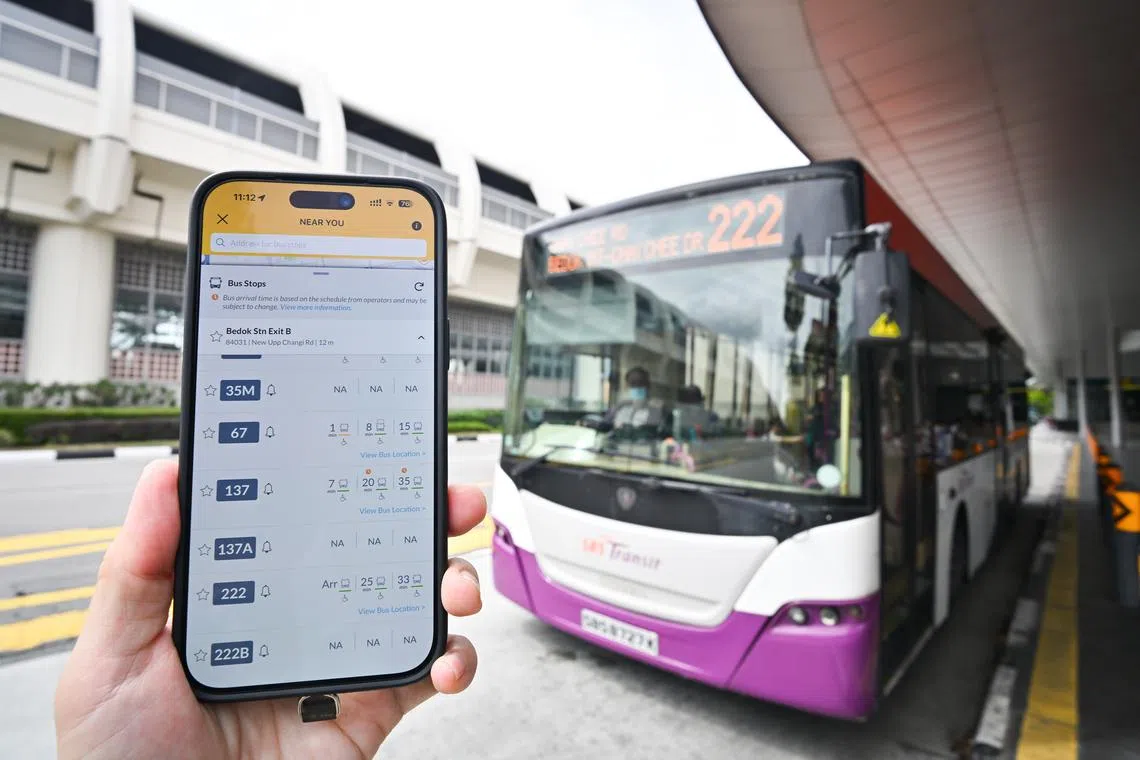
As a result, the bus arrival timing system operated at only 70 per cent capacity for the rest of the day, said Mr Siow. This led to inaccurate bus timings and long wait times being displayed at bus stops and on mobile apps.
Full functionality was restored only after the damaged cable was repaired.
Investigations showed there were no hardware or software malfunctions, and the issue was unrelated to a separate outage that occurred in January.
Noting that the bus arrival timing system is currently being upgraded, Mr Siow said the new version is slated to be deployed by the end of 2027.
The system will be hosted on the cloud, which he said will improve its resilience to any physical damage to its data connections.
In a separate written reply to Ms He asking about measures to minimise disruptions to public transport systems due to infrastructure works, Mr Siow said investigations into the April 18 incident are ongoing, and agencies may take legal action if Asia Piling is found to be culpable.
Telecommunication companies may also claim damages, as the construction firm had caused disruptions to the customers of all major internet service providers in Singapore when it hit the fibre-optic cables underground.
About 5,000 subscribers in parts of Ang Mo Kio, Bishan, Sengkang and Punggol experienced broadband disruptions after 25 telecommunications cables were damaged.
The incident occurred when the firm was carrying out contiguous bored piling work, which involves drilling large vertical holes into the ground and filling them with concrete to form a protective wall for excavation.
The construction works were being done as part of the North-South Corridor project, and Mr Siow said contractors must comply with the requirements of the relevant utility agencies when working in proximity to their services.
If convicted, a contractor that damages telecommunications cables can be fined up to $1 million, jailed up to five years or both.
In a written reply to a parliamentary question by WP MP Fadli Fawzi (Aljunied GRC) on May 5, Minister for Digital Development and Information Josephine Teo said the Infocomm Media Development Authority requires cable provider NetLink Trust to ensure its network is resilient to outages.
While the provider has built in redundancy and path diversity in cable routes, this route duplication is not possible nearer to homes where there are underground space constraints.
In the event that service disruptions still take place, the Telecom Service Resiliency Code requires telecommunications operators to recover their services as quickly as possible, she said.