
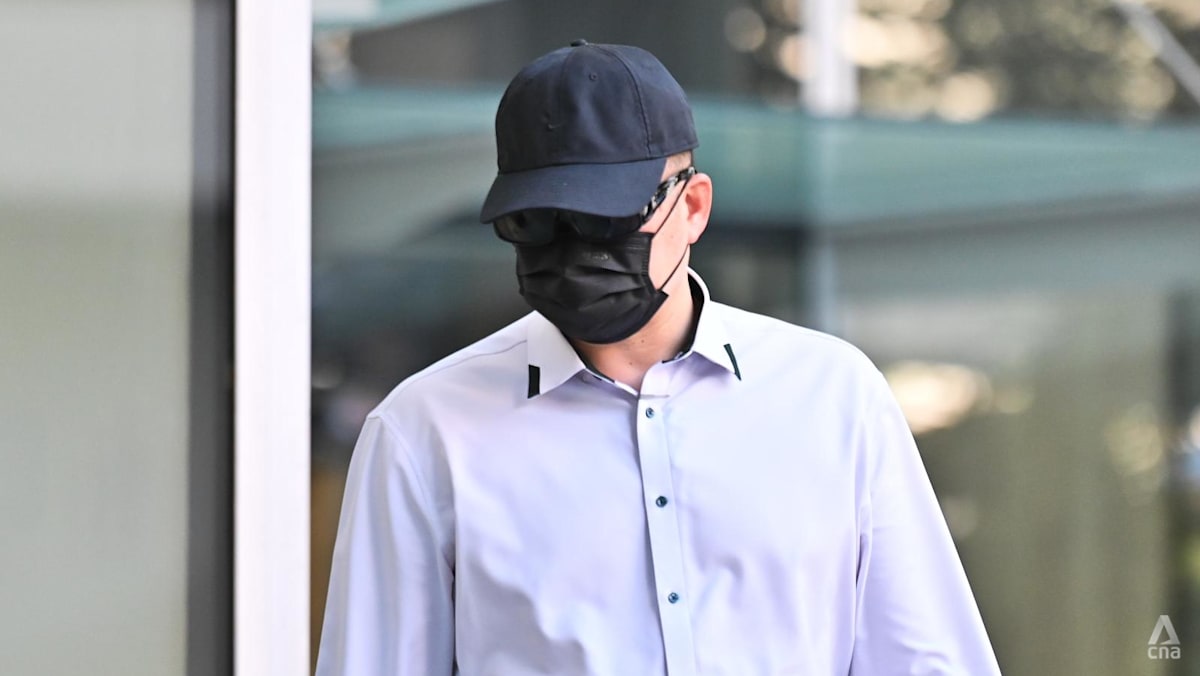
SINGAPORE: A district court has cleared a man of accusations that he received close to S$300,000 (US$234,000) in kickbacks when he was a shipyard manager for Keppel FELS from 2015 to 2017.
Alvin Lim Wee Lun, 46, was cleared on Wednesday (Jun 17) of all 46 charges of conspiring to corruptly obtain gratification from three vendors awarded contracts by Keppel FELS.
Two men – Rajavikraman Jayapandian and Goh Ngak Eng – were earlier convicted and penalised for their roles in the corrupt scheme.
Both offenders pleaded guilty and were witnesses for the prosecution in Mr Lim’s trial.
The acquittal turned on weaknesses in the evidence given by Rajavikraman, whom District Judge Eddy Tham said had possible motive to falsely implicate Mr Lim.
CUT OF KICKBACKS?
Keppel FELS, now part of Seatrium and known as Seatrium New Energy, specialised in shipbuilding and repairs.
Rajavikraman was a former assistant shipyard manager at Keppel FELS, and the project director of Rotating Offshore Solutions at the time of the offences.
He had befriended Mr Lim during his 13-year stint at Keppel FELS, which he left in 2013.
Goh was the director of Megamarine Services, which makes and repairs air winches and trades in equipment.
The scheme that Rajavikraman and Goh admitted to involved Mr Lim conveying Keppel FELS’ business requirements to Rajavikraman.
Rajavikraman would convey that information to Goh, who would then seek out vendors to provide those services. Rajavikraman would then refer vendors to Mr Lim.
Some of these vendors who were awarded Keppel FELS contracts were told to mark up their invoices, and the marked-up amount was split among the co-conspirators.
Rajavikraman and Goh each pleaded guilty to receiving S$191,115.89 in kickbacks for themselves.
Rajavikraman claimed that Mr Lim took a 15 per cent cut of the marked-up amounts.
By the prosecution’s calculation, this would amount to S$294,208.98 in kickbacks – more than Rajavikraman and Goh each received.
The prosecution also pointed to Mr Lim’s WhatsApp messages with Rajavikraman to argue that he had knowledge of the kickback scheme and car loans that Mr Lim was paying to argue that the sole breadwinner and father of three was living beyond his means.
DEFENCE’S ARGUMENTS
But defence counsel Justin Ng and Ravinderpal Singh of Kalco Law argued that Mr Lim only received about S$4,000 from Rajavikraman, and that he understood this to be a token of appreciation paid out of his friend’s own pocket.
“The corrupt scheme only involved kickbacks and not bribes. This made it possible for (Rajavikraman) to conduct the corrupt scheme without (Mr Lim’s) participation,” they argued.
“The representatives of the vendors … all agreed that there was no guarantee that they would be awarded jobs with Keppel FELS even if they agreed to participate in the scheme.”
Mr Lim was in fact focused on performing his new role as yard manager, said the lawyers.
“During this period, (Mr Lim) looked to (Rajavikraman) as a senior and mentor and often sought help from (Rajavikraman) to refer and to follow up with vendors for projects that were new and challenging,” they said.
“Little did (Mr Lim) know that (Rajavikraman) would betray his trust by conspiring with Goh and exploiting his relationship with (Mr Lim) to dishonestly obtain kickbacks from the vendors for himself and Goh.”
They also pointed out that apart from Rajavikraman, Mr Lim either had no contact with the prosecution’s witnesses, including Goh, or their interactions were limited to discussing their work with Keppel FELS.
The witnesses were therefore unable to say with certainty if he was knowingly getting kickbacks, the defence said.
They further argued that Rajavikraman had a strong motive to continue implicating Mr Lim to reduce his own culpability and sentence for his crimes.
Rajavikraman was incentivised to take the plea of guilt that held him responsible for receiving S$191,115.89, as this was significantly less than Mr Lim’s supposed cut, the defence highlighted.
INCONSISTENT EVIDENCE, MOTIVE TO LIE
Judge Tham found that Rajavikraman had possible motive to falsely implicate Mr Lim by painting him as a co-conspirator.
He noted that the prosecution’s case rested primarily on Rajavikraman’s evidence because he was the only witness with direct knowledge of Mr Lim’s supposed involvement in the conspiracy.
But there were inconsistencies in his evidence, such as his shifting account of how Mr Lim was allegedly recruited into the scheme and whether this was over the phone or face-to-face.
These were not minor inconsistencies but went to the heart of how and whether Mr Lim was ever brought into the conspiracy, said Judge Tham.
Rajavikraman’s accounts of handing over envelopes of cash to Mr Lim were also materially inconsistent, and these were not satisfactorily explained, the judge said.
The judge noted that when Rajavikraman testified in Mr Lim’s trial, he was in the midst of an appeal to reduce his jail sentence and penalty order of S$191,115.89.
Maintaining Mr Lim’s guilt was “self-serving” for Rajavikraman because his appeal was still pending, and any retraction of his evidence would disadvantage him, said the judge.
His evidence must therefore be viewed with “great circumspection”, the judge said.
In contrast, Mr Lim’s “candid admission” that he had received some money from Rajavikraman was more consistent with getting a casual token of appreciation from a longstanding friend than benefiting from a corrupt scheme, said the judge.
Judge Tham also said he was unable to accept the prosecution’s interpretation of the WhatsApp messages and other documentary evidence as the only possible explanation.
While the circumstances may give rise to some suspicion, the prosecution had not proven beyond reasonable doubt that Mr Lim knew about and was part of the corrupt scheme, and that he acted with guilty knowledge, said the judge.
The prosecution reserved its right to file an appeal after the verdict was delivered.