
SINGAPORE – While the number of physiotherapists here has increased by more than 30 per cent over the past five years, more are flocking from the public sector – a traditional stronghold – to the private sector.
Almost one in three physiotherapists is now in the private sector, according to data published in the Allied Health Professions Council’s 2025 annual report.
There are 916 physiotherapists working in private hospitals, clinics, centres and schools as at Dec 31, 2025. This amounts to 31.1 per cent of such workers, up from 25.5 per cent in 2021, and an increase of 339 physiotherapists.
Over the same period, their counterparts in the public sector increased by 176 workers to 1,130 people in total. However, the proportion of such workers dipped from 42.2 per cent in 2021 to 38.3 per cent in 2025.
If the trend continues, the private sector numbers could overtake those in the public sector in the coming years, which could potentially impact how readily and easily patients can receive subsidised physiotherapy services.
All three healthcare clusters here – NHG Health, SingHealth and the National University Health System (NUHS) – told The Straits Times there was no immediate impact on their physiotherapy services.
Responding to ST’s queries, the Ministry of Health (MOH) said that it plans to increase the intake for physiotherapists, and is working with the public sector employers in all three healthcare clusters to “put in place measures to attract, develop and retain a fair share of physiotherapists”, to meet the public sector demand.
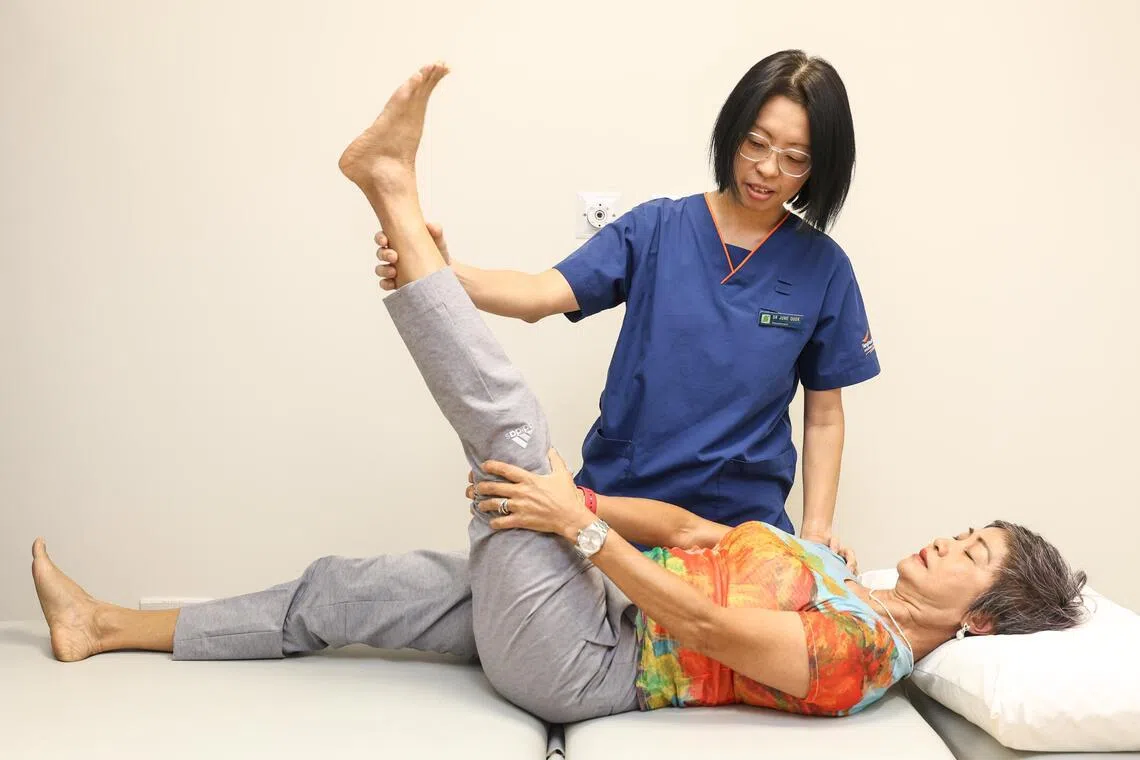
Physiotherapists help patients develop, maintain and restore their ability to move and function, to reduce pain and prevent further injuries, through exercises and other forms of therapy and treatments.
Beyond public healthcare institutions, a growing number of physiotherapists in the private and community care sectors are needed to provide services such as rehabilitation care to restore independence and self-confidence, as well as to reduce future fall risks and to manage weight, given the nation’s shift towards preventative care.
In its reply, MOH confirmed there is no cap or limit on the distribution of physiotherapists working in the public or private sector. It pointed out that the absolute number of those in the public sector increased from 2021 to 2025, by some 44 physiotherapists each year, even as the public sector’s share is trending downwards.
It added that the attrition rate for physiotherapists in the public sector was 10 per cent in 2025, slightly lower than the 12.1 per cent in 2022.
Kwah Li Khim, president of the Singapore Physiotherapy Association – the body representing the physiotherapy profession in Singapore – said the trend of more physiotherapists in the private sector most likely reflects a combination of factors, including growing demand for rehabilitation services in different care settings, individual career preferences and expansion of private healthcare services.
Kwah, who is also an associate professor at the Singapore Institute of Technology (SIT) and a senior principal physiotherapist at Singapore General Hospital, said that while it is not an immediate concern, the situation must be monitored.
At present, she said, the association does not anticipate overall manpower trends having a significant impact on care delivery or service capacity in the public sector.
The latest data on allied health professionals (AHPs), including physiotherapists, diagnostic radiographers and occupational therapists, showed that as at end-2025, there were 8,418 registered AHPs in Singapore, with 2,950 physiotherapists forming the largest AHP group.
In view of the rising demand for physiotherapists across the public, community and private healthcare sectors, MOH has been working closely with SIT to increase student intake targets from 175 for its 2024 academic year to 220 by 2027.
SIT’s degree programme is now the only local path that aspiring professional physiotherapists can take. Nanyang Polytechnic ceased its physiotherapy diploma programme after admitting the last batch of students in 2015.
Singapore also recognises physiotherapy qualifications from more than 70 overseas universities and institutions.
MOH said that public healthcare scholarships and cluster sponsorships are awarded each year to suitable candidates “to secure the annual supply of physiotherapists for the public healthcare sector”.
Such awards include those for mid-career workers sponsored under the Skills and Workforce Development Agency career conversion programme.
Those aged between 30 and 39 made up the largest group of newly registered physiotherapists over the past five years.
From 2027, training programmes for AHPs will incorporate the same core modules in their first-year curricula. In a few years, AHPs’ training pathways will also be built on “learning blocks”, which will allow the professionals to diversify or pivot into new roles as care needs change. This will open up a new channel to train more physiotherapists in the AHP pool.
All three clusters told ST that they are working on recruitment and retention of their staff, including physiotherapists.
Christopher Ng, deputy director of group allied health at NHG Health, said there has been no significant impact on the overall ability of NHG’s institutions to deliver safe and timely physiotherapy services. He said that the group continues to recruit actively, maintain a steady pipeline through training programmes, scholarships and mid-career conversion pathways, as well as implement initiatives for staff retention.
It has also implemented measures to manage growing care demand, and efforts are ongoing to right-site care for suitable cases to be managed in community and outpatient settings.
NUHS’ group chief for allied health, Abdul Rashid Jailani, said that the cluster’s physiotherapy services remain stable and accessible, despite a more competitive manpower landscape.
NUHS also partners private providers, as well as voluntary welfare organisations such as St Luke’s ElderCare, SPD and AWWA, ensuring patients discharged from NUHS can continue to receive physiotherapy services, he said.
He added that in a tighter labour market, talent recruitment and retention remain important. Thus, NUHS continues to adapt by investing in innovation for greater patient convenience and higher efficiency.
Examples of digital tools deployed by NUHS include physiotherapy chatbots to guide exercises and wearable devices to support virtual rehabilitation.
SingHealth’s group chief AHP Tan Bee Yee said that manpower shifts have no impact on the physiotherapy services across SingHealth’s institutions at present.
She added that the cluster deeply values the contributions of AHPs as part of the care team, including through awards to recognise their efforts, and measures such as regular engagements with senior management and well-being initiatives.
SingHealth also empowers its physiotherapists to pursue different career tracks through structured career development pathways, training and mentoring opportunities.
Beyond the clusters’ individual efforts, they also work closely with MOH “to keep careers attractive, ensure meaningful career progression pathways, keep remuneration competitive and create supportive work environments”, said the ministry.