
MANILA – Prime Minister and Finance Minister Lawrence Wong on Nov 15 called on ASEAN to set up a regional platform to coordinate and share information on companies behind fires that cause transboundary haze.
Singapore and Indonesia have already set up a joint taskforce that provides such a platform which can be expanded across the region, he added. There is also already a mechanism for cooperation in the Coordinating Centre for Transboundary Haze Pollution, he said.
PM Wong was speaking during the retreat session of the ASEAN Summit in Manila, where leaders shared their views on regional issues candidly during an informal meeting.
“I recall in May, we had a very productive and candid sharing of views, so I would like to continue in that spirit today,” he said, before proceeding to talk about the potential flash points for the region, including transboundary haze, Thailand-Cambodia border tensions and Myanmar.
Even as ASEAN contends with geopolitical tensions and external disruptions in an increasingly fractured world, internal tensions have continued to test the cohesion and consensus that underpins the grouping’s centrality.
While differences will always exist among ASEAN member states, managing them amicably and upholding collectively agreed principles and commitments will preserve the cohesion and unity that are the grouping’s greatest strengths, said PM Wong.
He added that Singapore looks forward to working with all ASEAN member states to strengthen this cohesion as it takes over the chairmanship of the grouping next year.
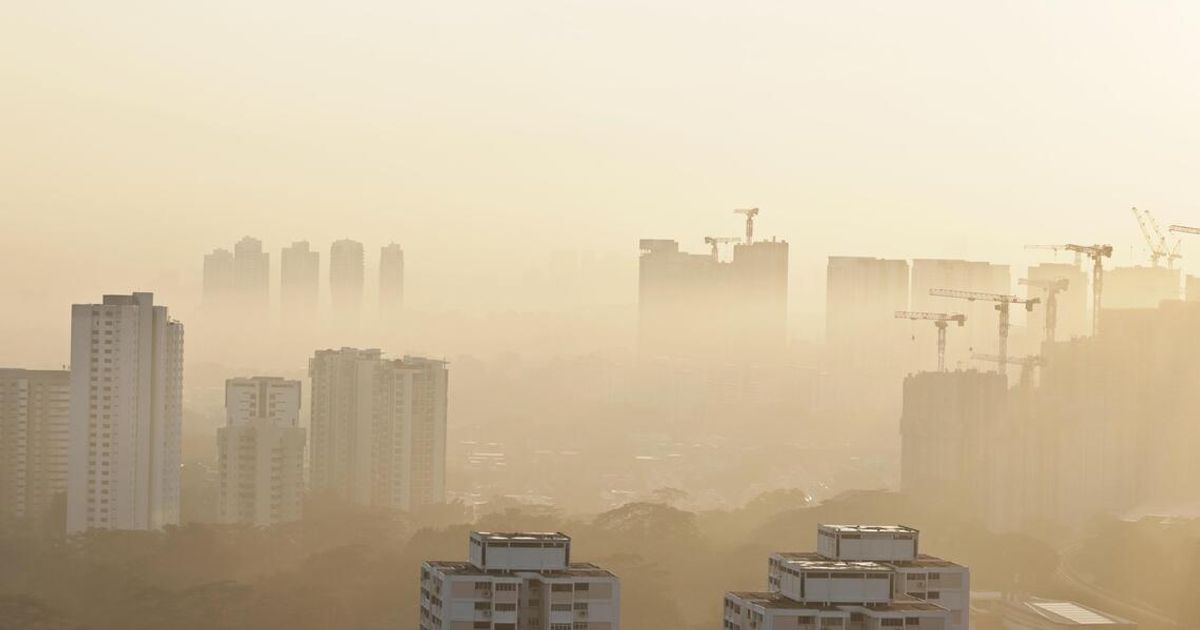
On haze, which had blanketed parts of the region from August to October, PM Wong said climate change and a very unusual El Nino season had resulted in a very dry spell and exacerbated the situation this year.
The persistent haze was sparked by huge fires in Indonesia’s Sumatra and Kalimantan owing to the burning of peatlands.
Noting Indonesia’s efforts in dealing with haze, he thanked Indonesian President Prabowo Subianto for his leadership in taking unprecedented efforts to tackle the forest fires, such as by calling for investigations.
He also expressed his appreciation for the many Indonesian emergency personnel and firefighters who work tirelessly in very dangerous conditions.
“We extend our deepest appreciation to them, and we send our best wishes for the recovery of those who are injured,” he said.
On Singapore’s part, he said the authorities have also pursued Singapore-based companies that may be responsible or may have links to companies that are responsible for the pollutive practices.
Parliament recently passed sweeping changes to Singapore’s haze law which will allow for increased financial and commercial penalties for errant companies.
On the set-up of a regional platform to deal with the issue, PM Wong said: “Fires can happen in any country in ASEAN, and we want to send a very clear message to all companies that this is not the way to go about clearing forests.”
“There are sustainable practices and if anyone is caught doing this, across ASEAN, we will share information, we will take action, and we will hold companies responsible.”
Even as ASEAN member states deal with the fires, the priority is to prevent a reoccurrence of the transboundary haze pollution, he added.
Besides the haze issue, PM Wong also touched on the situation involving Thailand and Cambodia.
Tensions remain between the two South-east Asian neighbours following deadly clashes on their shared border in late 2025. Their dispute over competing claims to ancient temples dates back more than a century.
PM Wong said Singapore understands it is a deeply emotive issue for the peoples of both countries.
He encouraged both sides to continue exercising restraint, avoid escalation, and to resolve differences through dialogue, including through established bilateral mechanisms.
He also pledged support for the process as Singapore takes over the ASEAN Observer Team next year.
The monitoring and peacekeeping team was established by the grouping to oversee the ceasefire and border arrangements between Cambodia and Thailand.
On Myanmar, which has been stuck in a civil war and humanitarian crisis since a military coup in 2021, PM Wong acknowledged the strong desire across all ASEAN countries for Myanmar to resume participation in the grouping at the political level.
To this end, ASEAN can do more to engage Myanmar and also work on a clearer roadmap, he said, referring to the Five-Point Consensus peace plan adopted by the grouping to deal with the crisis and bring Myanmar back into its fold.
But Myanmar on its part should also show its readiness to work constructively with ASEAN.
“If we are united on both sides, hopefully we can see good progress on this,” he said.
The path forward hinges on Myanmar demonstrating real progress in ceasing violence and facilitating meaningful dialogue among all stakeholders, he said.
Some progress has been made on the dialogue front, but a lot more can be done, he said.
Meanwhile, on reducing violence, Myanmar representatives have blamed some of it on Ethnic Armed Organisations and said not all of it is within the Myanmar government’s control.
“We recognise that, but at the same time we also want to make sure that there should not be any violence committed by the Myanmar government, and there should be effort in terms of a sustained reduction of violence in Myanmar, as far as the government is concerned,” said PM Wong.
He added that these conditions will be critical in restoring stability in the country, and to building a long-term Myanmar-owned and Myanmar-led solution.
If ASEAN leaders agree on a clearer roadmap, Myanmar would hopefully take steps towards meeting the requirements to regain political representation in the grouping, he said.
“We would like to see that outcome eventually, but it takes two hands to clap,” he said.