
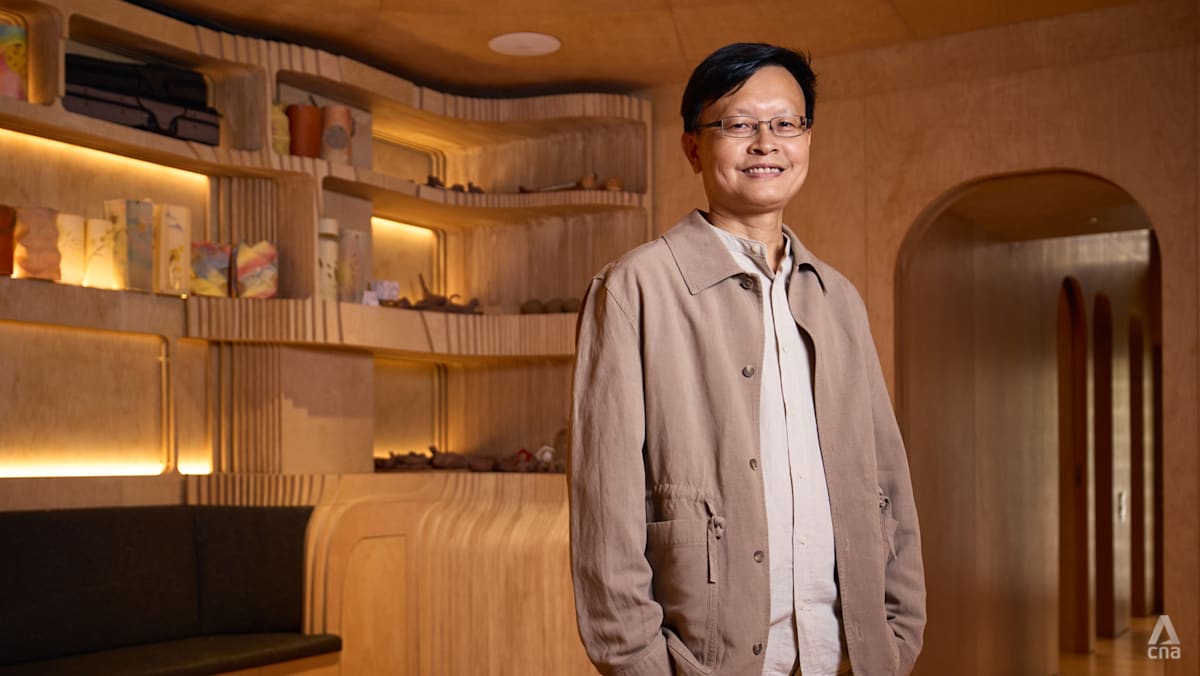
At the recommendation of a close friend, Chang eventually applied to study architecture and was accepted. On his first day, he knew there was no turning back after his tutor, the late Whang Tar Kuay, described architecture’s potential to inspire awe – from sacred spaces and civic buildings to great works that shape how people experience a place. “My only reference of architecture was HDB flats, but from that point on, my curiosity was piqued and I became fully immersed in the subject,” he added.
An assignment in his fourth year required him to design a yoga centre, marking the beginning of his spiritual journey. To better understand the subject, he went for a trial class at a Raja Yoga studio, not realising that he had signed up for meditation instead.
“It changed my life from then. I learnt how to focus my mind and when it was as still as clear water, I found I could see things clearly,” he said. Not long after, he took up hatha yoga and tai chi, practices that have remained part of his life ever since.
Upon graduation in 1996, Chang joined architect Tang Guan Bee, a pioneering figure in Singapore’s experimental architecture scene. “I wanted to learn from someone who was locally trained and whose approach to design was idiosyncratically local. There was something distinctive and original in the way he approached design, always in the spirit of exploration and innovation,” he explained.