
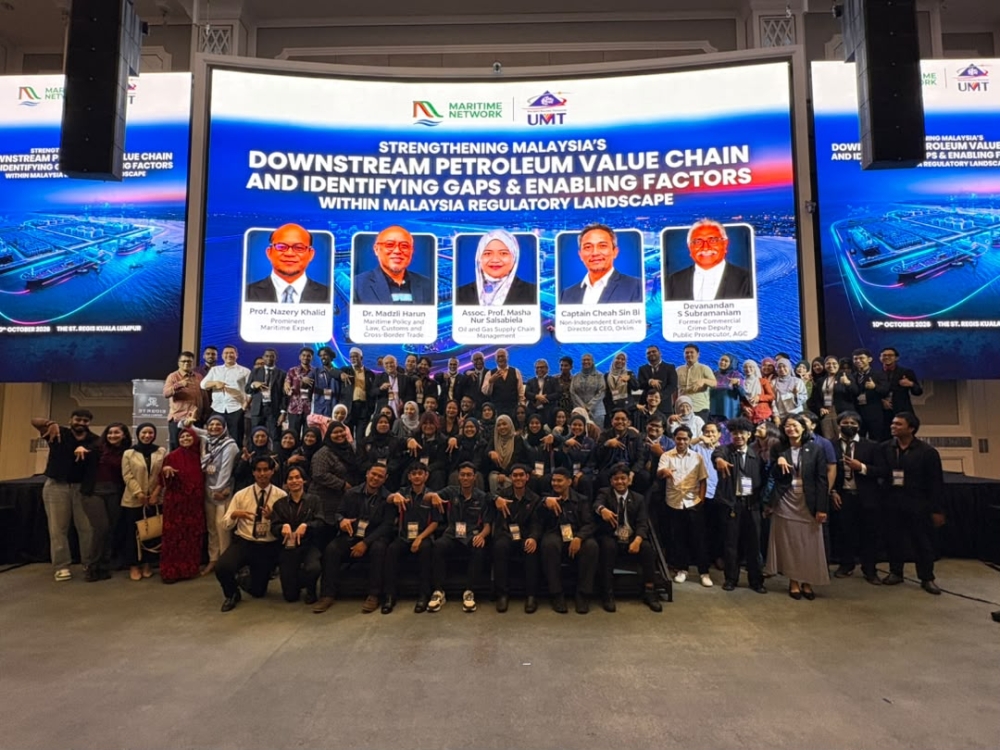
KUALA LUMPUR, Oct 10 — Oil blending activities must obtain written approval from the Customs director-general where required under the relevant regulations, and be backed by complete documentation to ensure legal compliance and transparent transactions, an expert said.
Maritime, Customs and cross-border trade policy and law expert Madzli Harun said every activity involving the import, storage, blending and re-export of oil must be carried out within the scope of the licence and the conditions set by the authorities.
He said blending could alter a product’s composition and specifications, so clear records were needed to verify quantities, cargo movements and the condition of the product before and after the process.
Related documents such as contracts, bills of lading and cargo manifests must be aligned to ensure the information declared matched the actual transactions and the condition of the goods, he said.
“If a premises is only approved for storage, any additional activities such as blending or changing a product’s grade must be scrutinised based on the scope of the licence and the regulations in force.
“Operators must ensure written approval is obtained when required, and that all activities are recorded accurately,” he said at a forum titled “Strengthening Malaysia’s Downstream Petroleum Value Chain and Identifying Gaps and Enabling Factors Within Malaysia’s Regulatory Landscape”, organised by Maritime Network Sdn Bhd in collaboration with Universiti Malaysia Terengganu (UMT).
Madzli said incomplete documentation, or discrepancies between records and the actual condition of the cargo, could raise questions over the declaration of goods, regulatory compliance and tax treatment.
A thorough audit was also important to ensure the volumes of oil received, stored, blended and exported could be identified and matched against the relevant documents, he added.

Maritime Network Sdn Bhd chief executive officer Datuk Seri R. Jeyenderan said responsible petroleum cargo management was not merely an operational matter, but also a question of protecting the country’s interests and ensuring future generations inherited a maritime industry built on transparency, safety and accountability.
In cross-border trade, he said, determining the origin of goods and their eligibility for treatment under free trade agreements must be based on the rules of origin and the relevant supporting documents.
As such, industry operators must ensure every transaction complied with the set conditions, while the authorities must have sufficient records to assess compliance levels and tax implications, he said.
He said clear controls over blending, including approval requirements and proper documentation, were key to preserving the integrity of the Customs system and reducing the risk of disputes between industry players and the authorities.
Meanwhile, maritime industry expert Nazery Khalid said oil blending carried out without approval, monitoring, compliance with standards and proper documentation must be taken seriously, as incidents could threaten health and safety and undermine the integrity of the authorities responsible for monitoring such activities.
He said if such incidents occurred, questions would arise over compliance with safety procedures, the effectiveness of monitoring and the enforcement of regulations on oil blending.
Approval, documentation oversight and compliance with operating conditions must be given close attention to ensure every activity was carried out in a controlled manner, in line with the set regulations as well as international standards and best practices, he said.
He said weaknesses and a lack of integrity in documentation, supervision and enforcement could not only pose risks to the public and the environment, but also erode the confidence of industry players, trading partners and the international community in the transparency of Malaysia’s cargo-handling regulatory system.
“Inconsistent and inaccurate cargo documents such as the bill of lading and manifest should not be taken lightly, especially for liquid cargo such as petroleum products and palm oil. They could open the door to various forms of misconduct that could harm health and the environment.
“If this situation is not addressed promptly and comprehensively, it could undermine public confidence in the integrity of the industry concerned and damage the country’s image on the international stage,” he said.
At the end of the session, Maritime Network Sdn Bhd chief executive officer Datuk Seri R. Jeyenderan said responsible petroleum cargo management was not merely an operational matter, but also a question of protecting the country’s interests and ensuring future generations inherited a maritime industry built on transparency, safety and accountability.