
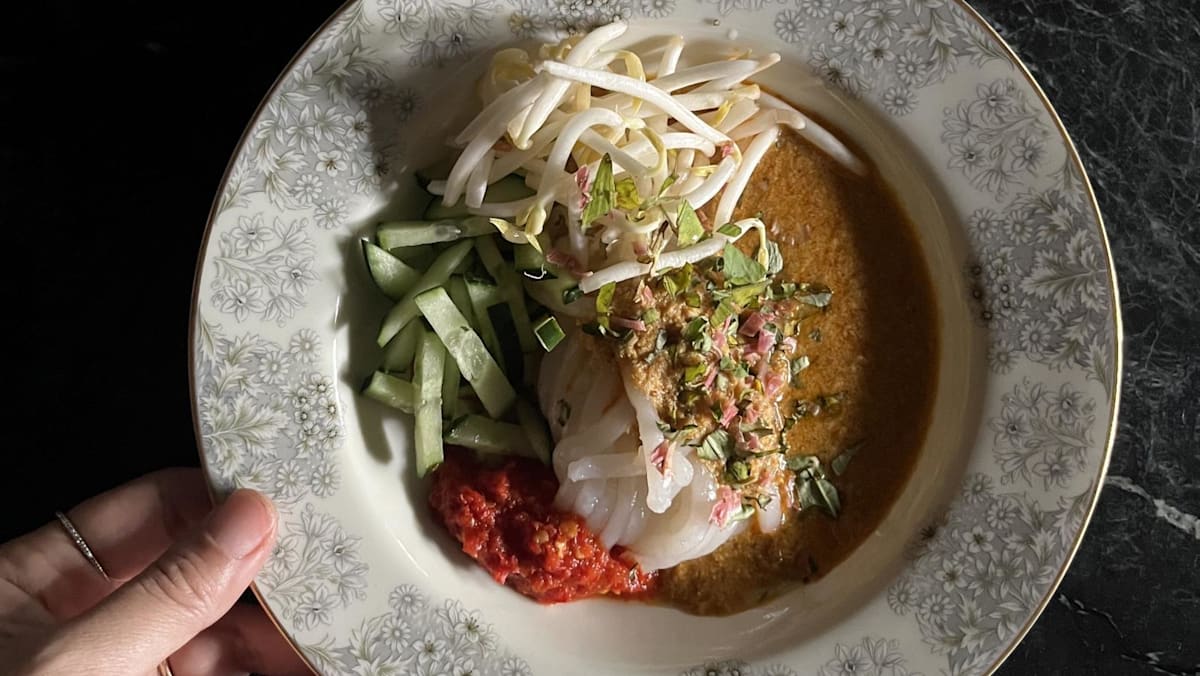
While far less common than Katong laksa today, it continues to be served at stalls in places such as Geylang Serai and Bedok.
Laksa Siglap’s close kinship with laksas across the Malay region is clear. “Penang’s assam laksa, for instance, has a fish-based broth. Then you have laksa Utara, laksa Kedah, laksa Kelantan with the rolled noodles, and of course, laksa Johor, which it is most similar to,” said journalist Azimin Saini, who grew up on his mother’s laksa Siglap and cooks it occasionally in Paris where he now lives.
“When I first tried Katong laksa, I didn’t get it. Where was the familiar fish broth and why was the rempah so… thin? All the delicious herbs and greens that make it a bright dish to have at lunch were also absent. It was then that I realised it was a different type of laksa, that in Singapore we have two types and not just one. Both are delicious and unique in their own way.”
SEPARATING THE DISH FROM THE NOODLES
Much like how “mee” describes the noodles in dishes like mee rebus and mee soto, “laksa” is actually the word for the rice-and-sago noodles used in the dish. “That’s why you have laksa Penang, laksa Katong and laksa Siglap,” Khir explained.