
Despite the extensive regulatory framework, Ms Wee said the Windsor case will inevitably lead families to ask whether audits are sufficient to detect problems before they escalate. She called for more unannounced inspections.
“This will help to catch the weak ones,” she said, drawing an analogy to a classroom: students who do their homework consistently would have little trouble with a surprise test, while those who are unprepared are more likely to struggle.
Dr Mary Ann Tsao, founder and chairwoman of the Tsao Foundation, said serious lapses in nursing homes can arise from insufficient manpower, inadequate staff training, weak quality monitoring and cost-cutting measures.
“A good nursing home is expensive to run as it’s labour-intensive,” she said. “To optimise profit, there would be temptation to cut corners and inappropriate cost-saving measures.”
LOOKING OUT FOR RED FLAGS
While regulators are responsible for oversight, both experts said families remain an important line of defence.
Dr Tsao said families should assess the level of professional support available, including access to appropriately trained physicians, nursing staff ratios and the overall standard of health monitoring.
She also recommended observing how staff interact with residents and whether residents have any meaningful choices in their daily lives.
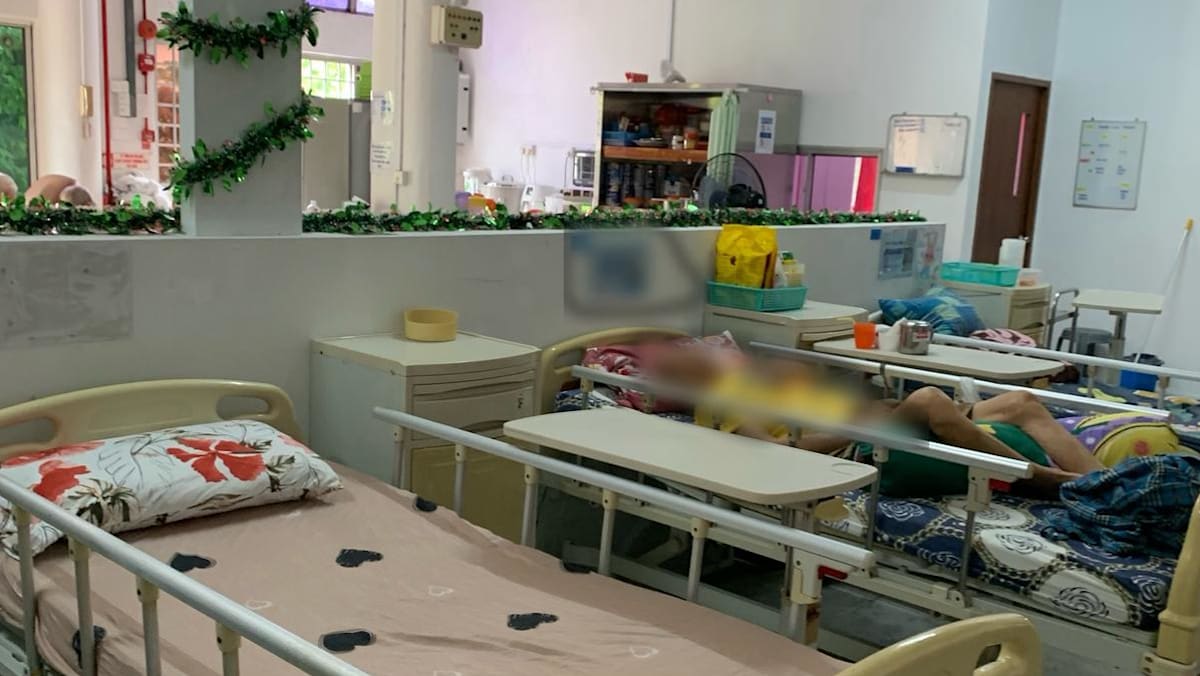
Ms Wee said families should also pay attention to the physical condition of a home.
“The first thing when you enter, you should look at is the infrastructure – does it look run down? Are things like the bed missing a wheel, or does the drawer have a broken handle? Are the bedrail guards dirty?
“Put it this way – if you won’t touch it yourself, then you know it’s not okay.”
Families should also watch for poor hygiene, persistent odours and whether residents who call for help receive prompt attention, she added.
Regular visits are equally important. “If you go there every week to visit, you will know (if there are any issues). You cannot just park (your loved one) there and only go once every few months.”
The clearest signals often come from the residents themselves, Ms Wee said.
Sudden changes in mood, appetite, behaviour or cognition should not be dismissed as normal ageing. Residents who become withdrawn, distressed, unusually quiet or desperate to leave may be signalling something deeper.
“We should all be asking ourselves – what kind of care would we want for ourselves and our loved ones?” she said.