
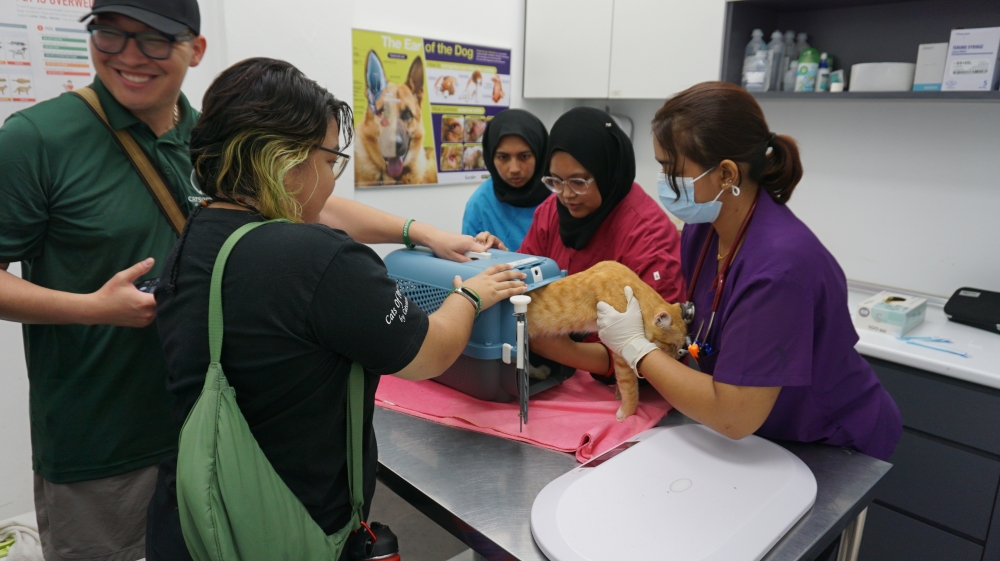
GEORGE TOWN, July 19 — What began as a grassroots effort to curb Penang’s growing stray cat population has evolved into a volunteer-driven movement that has already prevented thousands of kittens from being born on the streets.
Rather than operating as a shelter or cat rescue group, the initiative focuses on tackling the root cause of the problem, uncontrolled breeding, through a Trap-Neuter-Return (TNR) programme.
It started out as Cats of Penang in April last year and was formally established as Catsoterra Berhad in November.
To date, it has facilitated the sterilisation of almost 800 cats across Penang and subsidised more than RM50,000 worth of TNR services (as of July 8).
The programme is estimated to have prevented 7,116 kittens from being born on the streets.
The organisation’s founder, Daniel Lok Chin Leung, originally from Hong Kong and now based in the United States, said he has seen animal welfare systems that weren’t working despite being built with good intentions.
“After being involved in animal welfare for a long time, I’ve learned that the mission has to remain the driving force behind every decision,” he said in an email interview with Malay Mail recently.
He said an organisation should not be relying only on donors as this creates a structural weakness.
“I believe running a nonprofit should be approached with the same discipline, strategy, and accountability as running a business,” he explained.
“I wanted to be part of building something more sustainable — something that could actually help solve the problem instead of just reacting to it.”
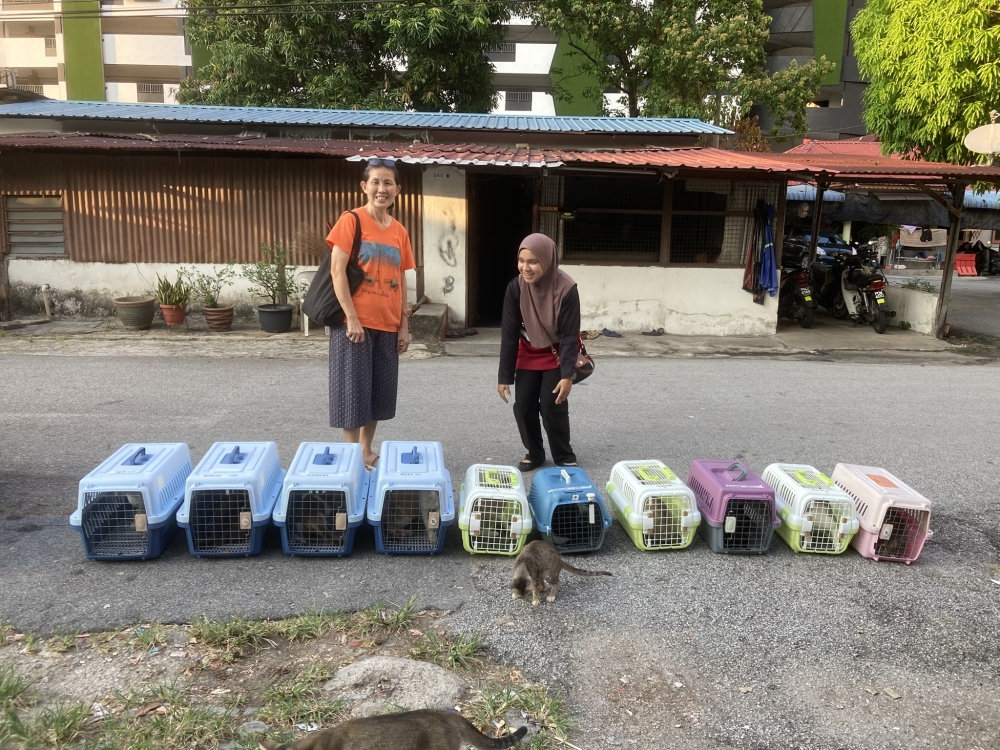
Catsoterra is powered by volunteers who will trap stray cats, transport them to the veterinary clinic, monitor their recovery before returning them to where they were found. — Picture courtesy of Catsoterra
Lok, a respiratory therapist, manages Catsoterra together with chief marketing officer, Johnny “Ricky” Trogdon while Jonas Breuer, a digital nomad and the organisation’s IT lead, develops and maintains the technology that powers the platform.
Explaining the Catsoterra system, he said volunteers who join the platform pay an annual RM60 membership fee.
“This gives them access to our dashboard, where they can schedule sterilisation appointments with our partner clinics, manage their TNR activity, and track both their personal impact and the organisation’s overall progress,” he said.
Once registered, volunteers can sterilise as many cats as they are able to trap and transport while Catsoterra covers the base cost of sterilisation.
When asked about the funding model for Catsoterra, Lok said the initial startup costs were covered through personal funds and with support from family and friends.
“Since then, much of the funding has continued to come from my own personal funds while we work toward building a more sustainable model,” he said.
The organisation recently started marketing its first product, their online dashboard, as a way to generate revenue and support the long-term sustainability of the organisation.
“The goal is to reduce reliance on personal funding and create a structure that can continue supporting TNR work in Penang over time,” he said.
The organisation initially has a set target of sterilising 1,000 cats in Penang and is now close to reaching it.
“After 1,000 cats, our focus will be on improving the system, expanding our capacity, and increasing our impact year after year,” Lok said.
“We want to keep building on what works, learn from what doesn’t, and continue pushing ourselves to surpass our previous results,” he added.
He said their long-term goal is to create a sustainable model for stray cat population management in Penang.
When asked why he chose to start this TNR programme for stray cats in Penang, Malaysia despite being based in Maryland, in the United States, he said Penang is unlike anywhere else in the world.
“No place is perfect, but Penang has a certain charm — and, from an animal welfare perspective, it is also a meaningful place to begin,” he said.
The 30-year-old said Penang, being an island state, has clear boundaries with a fixed number of regions with a community structure that makes targeted work possible.
“Just as importantly, we were not starting from zero. TNR was not a new concept in Penang; other NGOs and volunteers had already helped establish the foundation,” he said.
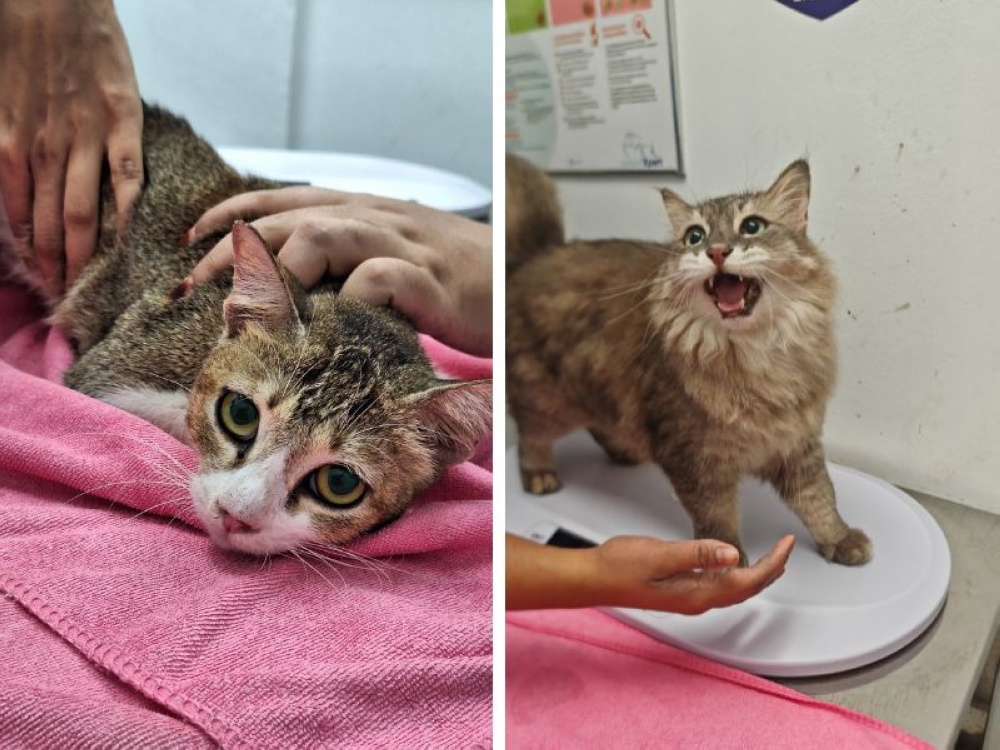
Cats being checked at the veterinary clinic before sterilisation. — Pictures courtesy of Catsoterra
The Penang Island City Council has been working in collaboration with Independent Aid for Protection and Welfare of Animals Penang to implement a TNR programme for stray dogs since 2018.
Though Lok lives in the United States, he visits Penang about once a year.
“Most recently, I spent the month of April in Penang working directly with the team, meeting volunteers, visiting partner clinics, and helping support the programme on the ground,” he said.
He said he is also closely involved in the day-to-day work of the organisation remotely, especially through operations, communications, and the systems they use to support their volunteers.
Catsoterra currently has a total 77 volunteers based across Penang, both on the island and the mainland.
Lok stressed that the heart of Catsoterra is its volunteers as they are ordinary Penangites who set traps, transport the cats to appointments, monitor recovery and care for the cats in their neighbourhoods.
“Every statistic represents the efforts of ordinary people choosing to make a difference for animals in their communities,” he said.
Find out more about Catsoterra here: https://catsoterra.org