
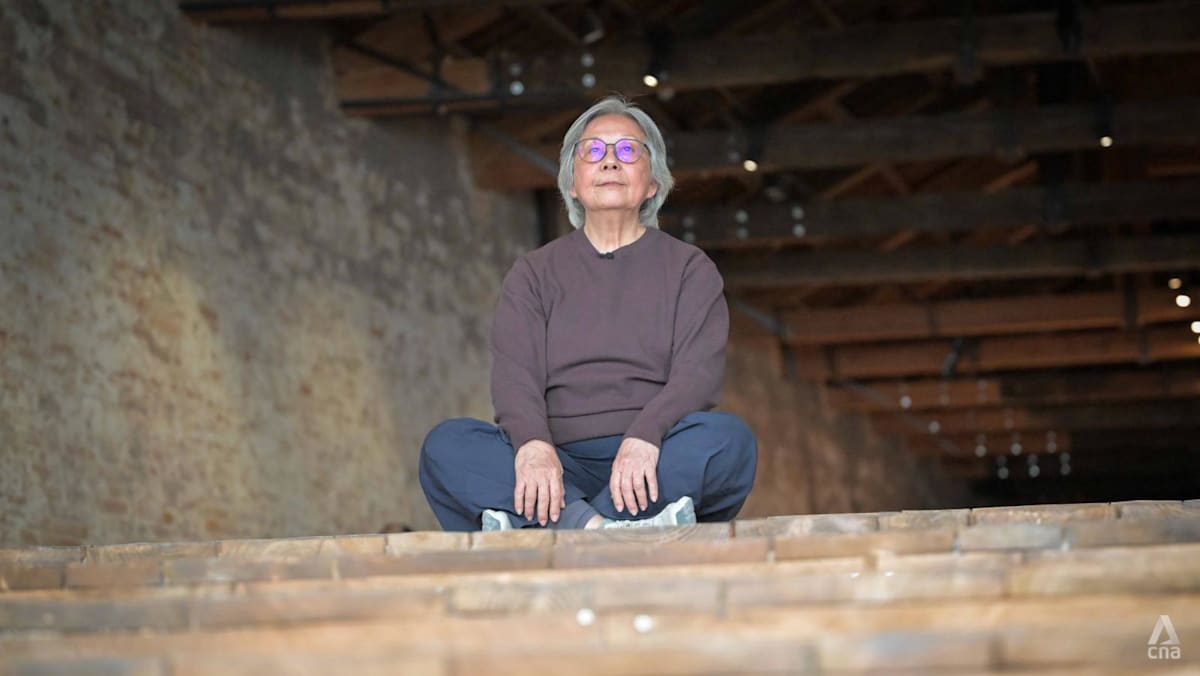
A significant figure in the contemporary arts scene of Singapore since the 1980s, Heng is a Cultural Medallion recipient who has had her work featured in major biennales and art festivals. Most recently, she was included in the all-women group show Fear No Power: Women Imagining Otherwise at the National Gallery Singapore, which runs until November.
From walking a pet stool down the street to setting up a table to encourage people to have conversations while plucking beansprout, Heng’s body-centric practice spans nearly four decades.
These two, titled Walking The Stool and Let’s Chat respectively, are among her well-known performance pieces. Heng uses everyday gestures and ideas to explore gender roles and societal expectations in her practice.
And it’s no different in Venice. Inspired by the city’s many bridges, Heng uses the ordinary and familiar element of their steps and her observations of people using them to create A Pause.
The steps are unusually shallow – at 10cm high and from 50cm to 4m in width – and naturally slow down visitors’ movement as they wander towards the large windows of the building.
Heng and curator Selene Yap had also decided to embrace these windows as a key feature of the pavilion, after noticing how visitors in previous years would gravitate towards them as a form of visual respite.
“It is interesting how the design directs our gestures, our activities. In a way this precisely speaks about what I wanted to say – how to slow down,” said Heng.
Yap said the idea was to “adopt the building’s material language as it is” in order to assimilate the pavilion into the existing architecture. In fact, the steps are made of larch wood, the same type of timber found in the floorboards of the Arsenale’s Sale d’Armi where the Singapore Pavilion is located.
“The dimensions of this space invites different postures of rest. You could choose to stand. You could lie. You could sit down. You could lean. It’s basically your body telling you what it wants to do,” added Yap.