
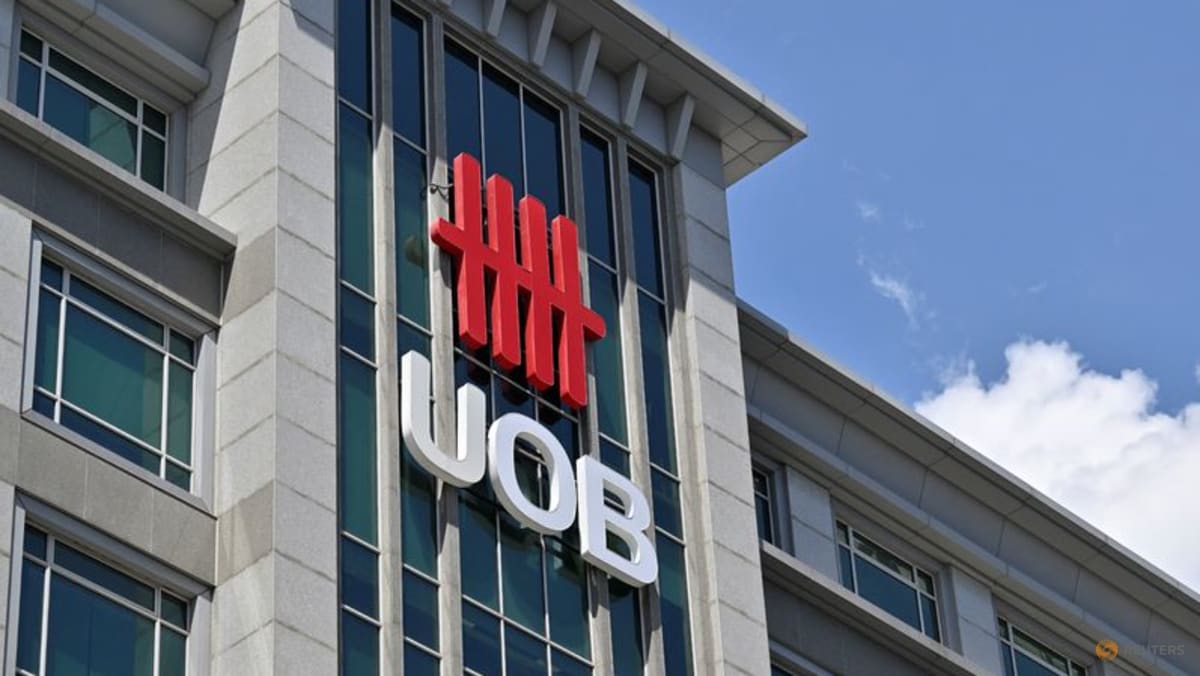
SINGAPORE: Singapore’s United Overseas Bank, or UOB, reported on Thursday (May 7) a 4 per cent annual fall in first-quarter net profit that, despite beating expectations, reflected the impact a precarious market backdrop and rate headwinds have had on the lender.
Southeast Asia’s third-largest bank by assets posted declines across all its income segments for the January-March period, though it maintained its previous guidance for its 2026 outlook.
Net interest income fell 4 per cent year-on-year due to lower benchmark rates, and net fee income eased 8 per cent from last year’s record high, which UOB attributed to a moderation in investment banking and loan-related activities amid cautious and risk-off market sentiment.
Softer trading and investment income also sent the lender’s other non-interest income down 17 per cent on an annual basis.
For the quarter, the bank’s net profit declined to S$1.44 billion (US$1.14 billion) from S$1.49 billion a year earlier, though it beat the mean estimate of nearly S$1.38 billion from three analysts polled by LSEG.
“While global uncertainty remains elevated, business activity held up across our key segments, with ongoing momentum in CASA, wealth, cards and loans,” said UOB CEO Wee Ee Cheong in a statement.
Net interest margin, a key gauge of profitability, fell to 1.82 per cent in the first quarter from 2.00 per cent in the same period a year earlier.
Wealth income rose 6 per cent year-on-year, while assets under management increased 5 per cent to S$198 billion.
UOB’s results came after larger rival DBS Group last week reported stronger first-quarter earnings that beat analysts’ forecasts, driven by growth in its wealth management business. Globally, Standard Chartered also beat expectations last week with a 17 per cent profit rise, but HSBC reported on Tuesday an unexpected US$400 million loss linked to the collapse of British mortgage lender Market Financial Solutions.