
SINGAPORE – Making sure workers are not left behind amid a technological surge in the transport sector and setting up integrated regional transport systems were among the key issues raised in Parliament on July 7.
Twenty-four MPs spoke during a six-hour debate on a motion on the Future of Transport, tabled by Tin Pei Ling (Marine Parade-Braddell Heights GRC).
The motion focused on ways to improve Singapore’s role as a global transport hub, including creating a seamless way to travel across different transport modes in Singapore, deploying autonomous vehicles in areas with transport gaps, as well as building digital infrastructure in the maritime sector.
Tin, who chairs the Transport Government Parliamentary Committee, outlined three key planks – frontier technologies, international cooperation and infrastructure – that are critical in ensuring Singapore’s global connectivity.
Acting Minister for Transport Jeffrey Siow, Minister of State for Transport Baey Yam Keng and Senior Minister of State for Transport Sun Xueling also joined the debate.
Better integration of transport ecosystem
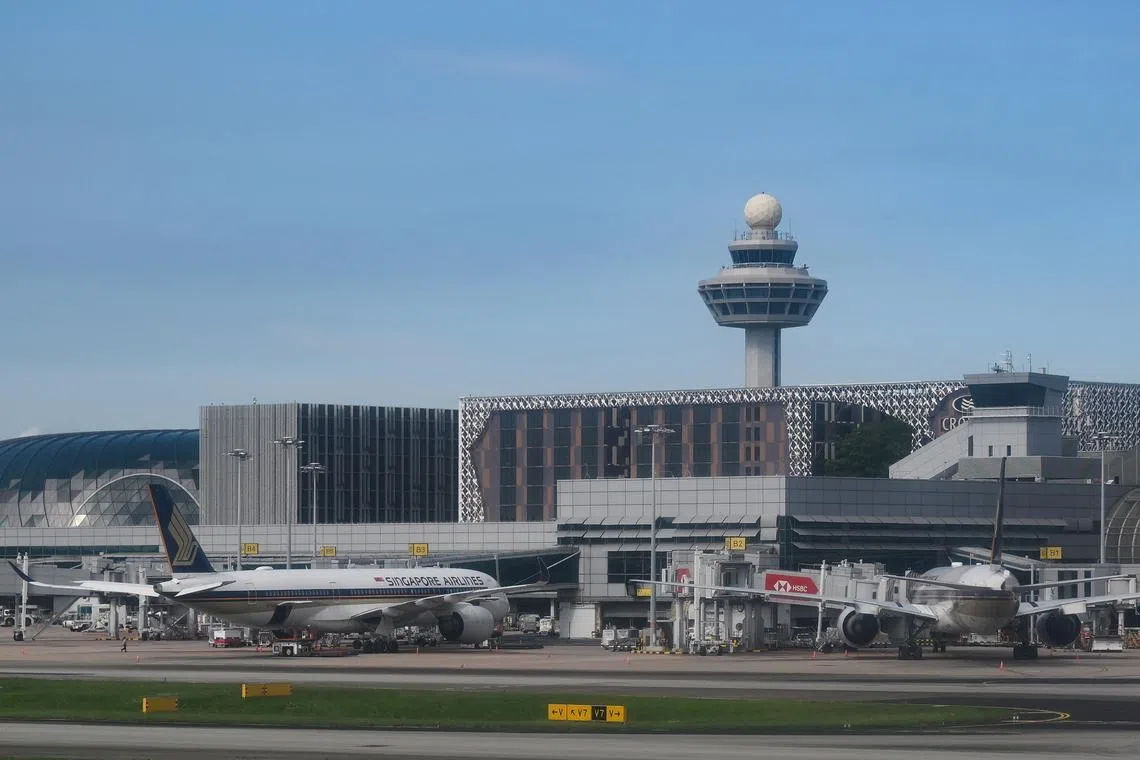
Valerie Lee (Pasir Ris-Changi GRC) touched on better maximising opportunities in the east of Singapore – including Changi Airport’s Terminal 5, Tanah Merah Ferry Terminal, Changi Airfreight Centre, Changi Business Park and Loyang Industrial Estate – with stronger air-sea transport connections.
The area is close to the Batam-Bintan-Karimun free trade zone, and there is a chance that the east of Singapore has the potential to become an “integrated gateway” for aviation and maritime connectivity, in addition to becoming logistics, business and tourism hubs.
Echoing this, Sharael Taha (Pasir Ris-Changi GRC) proposed transforming Singapore’s eastern corridor into an integrated economic powerhouse.
Edward Chia (Holland-Bukit Timah GRC), deputy chairman of the Transport GPC, proposed a unified sea, air and logistics control tower in Singapore – to provide a real-time picture of cargo flows across Changi, Tuas and key logistics nodes.
This will allow infrastructural assets – including Changi Airport Terminal 5 and the Tuas mega port, which will enhance capacity – to work together intelligently when supported by artificial intelligence, he added.
In a similar vein, Jackson Lam (Nee Soon GRC) said the successful roll-out of a virtual replica of Singapore’s ports can be expanded to include the airport, logistics providers and customs into an integrated digital ecosystem across all three sectors.
Sun, in her speech, said the Government is studying how to best enable seamless air-sea transfers between Changi Airport and Tanah Merah Ferry Terminal, as part of its work on future developments in Changi.
Helping workers stay relevant
Several Labour MPs spoke on the issue of helping more workers harness new technologies.
Nominated MP Sanjeev Kumar Tiwari said automation, robotics and AI can remove repetitive and physically demanding tasks, allowing experienced workers to move into higher-value roles.
He called for more to be done to equip affected workers with relevant skills to tap new technologies, and to find ways to make these new jobs accessible to everyone.
Yeo Wan Ling (Punggol GRC), who is also NTUC assistant secretary-general, said workers do not want to be left behind amid the digital transformation of the transport sector.
Conversations around job redesign should take place early and involve workers themselves, she added. And visible and credible career pathways should be set up for them to transition to new roles, she said.
Investment potential
Poh Li San (Sembawang West) suggested setting up an electric aircraft manufacturing hub in Singapore, to create more job opportunities and reduce the sector’s carbon footprint.
An electric aircraft is a jet that runs on batteries or electric motors.
Sun, in her response, said such aircraft are not ready for deployment now because it may take time to enter commercial operations. For now, they can only complement aircraft using sustainable jet fuel.
Yip Hon Weng (Yio Chu Kang) suggested that Singapore can become a travel gateway for the wider Johor-Singapore-Riau region.
For instance, airport check-in and baggage drop processes could be done in Johor, so that the Changi Airport journey could begin across the Causeway. Following that, cross-border transport services can be arranged to bring travellers straight to Changi Airport, he said.
The same arrangement could apply to Bintan and Batam in Indonesia, said Yip.
Physical infrastructure vs digital infrastructure
Six Workers’ Party MPs spoke during the debate, with suggestions that included ways for Singapore to complement its investments in major transport infrastructure with a stronger push to develop and own digital technologies that underpin global trade.
For instance, Gerald Giam (Aljunied GRC) said Singapore’s heavy reliance on physical infrastructure, such as Changi Airport’s Terminal 5 and Tuas Port, could leave it vulnerable when global trade patterns evolve.
If the long-planned Northern Sea Route through the Arctic becomes a reality, it could divert maritime traffic away from Singapore, he added.
New long-range aircraft capable of bypassing traditional hub airports like Singapore are also examples of changes that could reduce Singapore’s strategic importance as a transport hub.
Instead, Singapore can become a “sovereign digital architect” of global trade by investing more heavily in next-generation supply chain software, such as automated customs clearance platforms and predictive route-management systems, he said.
Dennis Tan (Hougang) said in his speech that Singapore remains heavily dependent on foreign-developed software platforms for critical logistics and transport operations.
He called for Singapore to shift from being “an efficient technology adopter to an aggressive platform creator” by developing and exporting its own transport technologies.
Jobs and the rise of self-driving vehicles
Singapore is strengthening its position as a global transport hub, but it is important to look at how these efforts will reshape jobs and impact workers, said Wan Rizal Wan Zakariah (Jalan Besar GRC).
What workers need is better support, as automation continues to transform the aviation and maritime sectors, leading to jobs being redesigned, he said.
A transport hub is only complete because of the people who keep it moving, as infrastructure alone does not make Singapore a global hub, said NMP Tiwari.
He added that the future of transport should not be something Singapore’s workers merely adapt to, but must be a future they can look forward to.
As for autonomous vehicles (AV), Wan Rizal said the technology should be used to reduce commute times for transport workers who have to travel extensively to both ends of Singapore.
Driverless vehicles can help with first- and last-mile connections to Changi, Tuas, ferry terminals and industrial estates, especially in the early and late hours, he added.
Ang Wei Neng (West Coast–Jurong West GRC), who is also chief executive of cab operator Strides Premier, chimed in on AVs, urging the Government to consider the impact on workers in the point-to-point transport sector.
He said the taxi fleet has shrunk to about 12,000 vehicles, while the number of private-hire car drivers has grown to more than 60,000.
If AVs were to replace just 10 per cent of the combined fleet, about 7,000 drivers could be displaced, he said.
Rather than “pitting machines against drivers” in high-demand areas, he urged the Government to deploy AVs in underserved locations such as Tuas, Jurong Island, Sentosa and Mandai.
Mr Ang also called for a realistic approach to retraining.
While some drivers could become safety operators for AV fleets, each controller is expected to oversee up to 15 vehicles, meaning there would not be enough of such jobs for all displaced drivers, he said.