
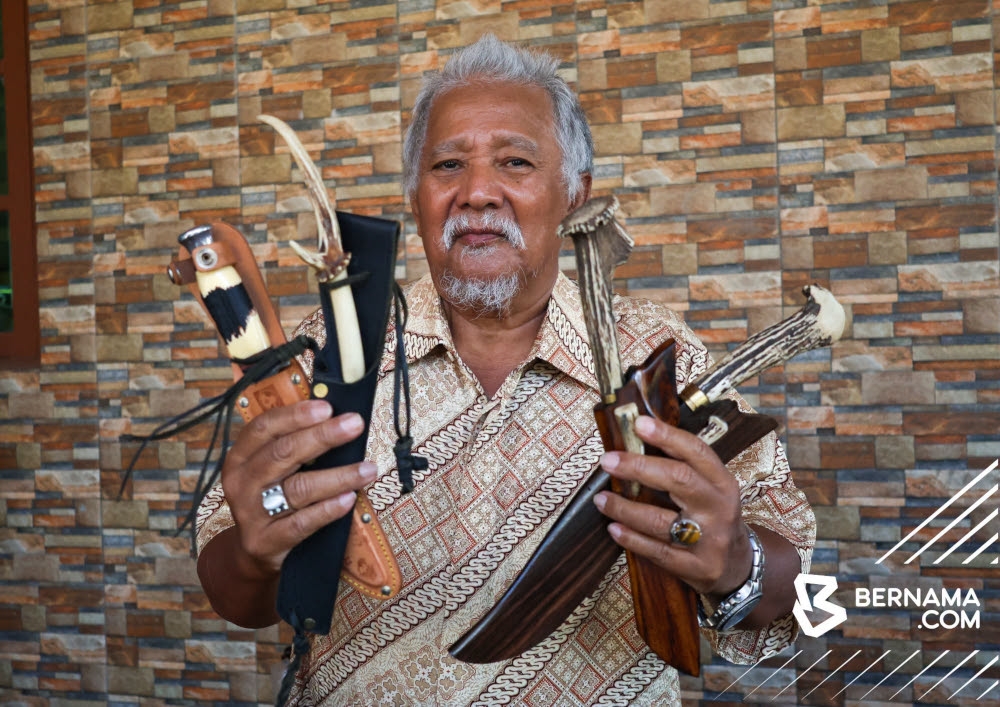
GUA MUSANG, July 15 — A golok with a bird-shaped hilt clutching a nut is more than retired civil servant Ahmad Abdullah’s most treasured possession.
It symbolises the fading legacy of Kelantan’s traditional blacksmithing, as many master craftsmen have passed away with few successors to carry on their skills.
Crafted more than a decade ago, the golok, which is similar to a machete, was forged by a renowned local blacksmith celebrated for producing traditional weapons entirely by hand before his death several years ago.
Ahmad, 71, said such handcrafted pieces have become increasingly valuable because each carving reflects the maker’s unique identity, making every blade a distinct work of heritage with its own story.
“This golok is the one I cherish most because its carving is exceptionally rare. It also reminds me of the person who introduced me to the art of blacksmithing.
“To me, whenever a blacksmith passes away, part of that craft and knowledge disappears too, unless it is passed on to the next generation,” he told Bernama recently.
Ahmad said the golok is far more than a traditional weapon.
For centuries, it has served as a versatile tool across the Malay Archipelago, particularly for agricultural work, with each region developing its own distinctive design and identity.
He said the bird-shaped hilt not only provides a comfortable grip but also carries historical and artistic significance.
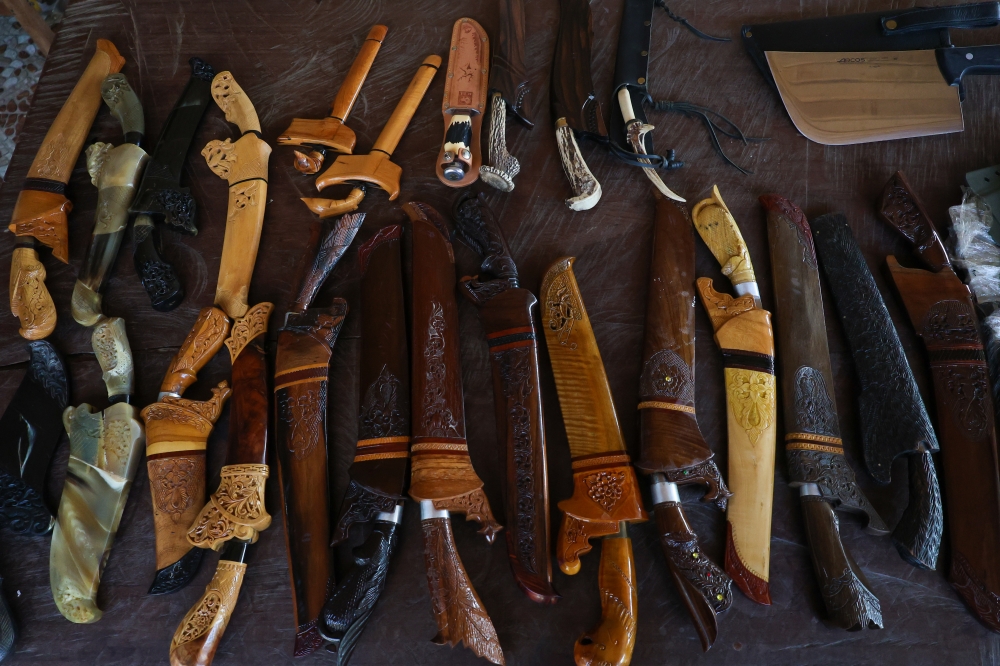
Among the collection of traditional and modern weapons amassed by retired civil servant Ahmad Abdullah, 71, are various types of ‘golok’, knives, swords and ‘keris’ acquired from Germany, Sweden, Denmark, England, the US, Japan, China, Spain and Portugal. — Bernama pic
“The bird motif reminds me of the Petalawali bird figure found on ancient boats of the Kelantan Sultanate that were once used to deliver the Bunga Emas tribute to Siam,” he said.
Preserving antique weapons requires meticulous care to prevent deterioration and rust, Ahmad noted.
“I keep them in a dedicated cabinet and inspect each piece every three months, applying oil to the blade to protect it,” he explained.
Despite receiving interest from collectors, Ahmad said he has never considered selling his collection, as many of the pieces were crafted by blacksmiths who have since died and whose workmanship can no longer be replicated.
Ahmad’s fascination with traditional blacksmithing began about 20 years ago when he helped a friend, who was a blacksmith, make weapon hilts and scabbards.
“What started with a single golok grew into a deep appreciation for the craft, leading me to collect weapons from Malaysia and abroad,” he said.
Today, Ahmad owns more than 100 traditional and modern weapons worth an estimated RM20,000.
His collection includes machetes, knives, swords and keris acquired from Germany, Sweden, Denmark, England, the United States, Japan, China, Spain and Portugal.
Among his prized possessions are a knife with a deer-antler hilt from Sarawak and a keris crafted from black kemuning wood with a golden kemuning wood hilt.
Ahmad hopes Malaysia’s traditional weapon-making heritage will continue to thrive through innovation while preserving the identity, artistry and cultural values that define the craft, ensuring the legacy of the country’s master blacksmiths is not lost to time. — Bernama